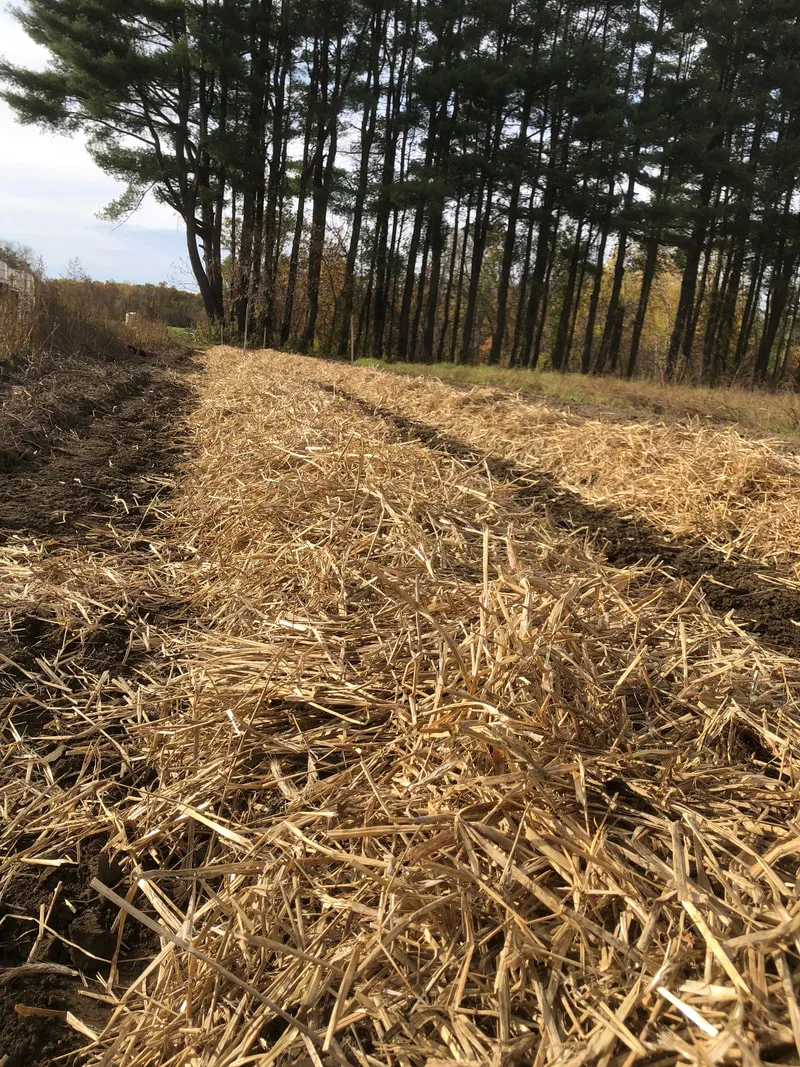
Did you know soil is happiest when there's always something growing on its surface?
Cover crops are so simple yet have so many amazing features! From being used as a weed suppression tool to preventing and reducing disease pressure, cover crops are vital to cropping systems for so many reasons.
First of all, did you know a cover crop can almost never have a negative effect on a cropping system? Their only job is to build and benefit soil health in a natural way. Nothing sparks my interest more than improving soil health in an environmentally friendly and sustainable way!
It has always been our goal to use cover crops to feed my plants instead of conventional fertilizers. It creates a healthier environment for the plants and produces higher yields in an organic way.
What is a cover crop?
cov·er crop | noun
A crop grown for the protection and enrichment of the soil.
Cover crops are so simple yet have so many amazing features! From being used as a weed suppression tool to preventing and reducing disease pressure, cover crops are vital to cropping systems for so many reasons.
First of all, did you know a cover crop can almost never have a negative effect on a cropping system? Their only job is to build and benefit soil health in a natural way. Nothing sparks my interest more than improving soil health in an environmentally friendly and sustainable way!
It has always been our goal to use cover crops to feed my plants instead of conventional fertilizers. It creates a healthier environment for the plants and produces higher yields in an organic way.
What is a cover crop?
cov·er crop | noun
A crop grown for the protection and enrichment of the soil.
Why are cover crops so important?
Cover crops act as a barrier between the soil and the atmosphere. They are a huge benefit because they hold the soil in place during the fallow times of year, as well as feed the microbes in the soil that create vital nutrients that plants require to grow. Soil microbes, earthworms and insects are key to plant growth and development.
NOTE: Fallow is leaving a field out of production for a year so, while growing a cover crop, keeping it protected and rebuilding soil nutrients and overall health.
The cover crops roll in all of this is taking the carbon out of the atmosphere and putting it back into the soil which the microbes feed from. Without cover cropping the soil is more prone to deteriorate with no structure holding it in place, flooding and erosion, and/or being blown away. The first 2 to 3 inches of top soil is some of the most important for growing. Without cover crops farming would be much more risky and difficult.
Here are examples of cover crops that are vital to farming:
Winter Rye
This is a cool cover crop that is primarily used in the fall for holding the soil in place to prevent winds from taking it. This crop can germinate and grow in temperatures as low as 33F degrees. It also grows very rapidly giving lots of biomass and has an extensive root system for soil holding power. Winter Rye overwinters meaning it will keep growing in the spring again so it needs to be killed-off. The other benefit of Rye is it can be a forage crop meaning it can be cut for straw right before the rye goes to seed to make bales. This is a great way for farmers to bring in extra revenue while benefiting their fields.
NOTE: Biomass is plant matter. Grass that is produced from Rye and Sorghum cover crops are filled with nutrients that can be put back into the soil.
Tillage Radish
This cover crop also called Forage Radish or Dicon Radish. This is a fall-seeded Brassica that has a very neat feature. This crop acts as a natural subsoiling tool. It grows a large taproot to breakup soil compaction by creating holes in the soil for water drainage to reduce erosion problems. Tillage Radish winter-kills after a few hard frosts and breaks down by spring.
NOTE: Brassica is the scientific name for cold weather crops, species such as cabbage, broccoli, and radishes.
Peas & Oats
These cover crops work well as companions to optimize soil health. Peas are just a field pea that can be used as forage for animals. They are also a legume crop meaning they collect and store nitrogen so it does not leach or volatilize into the air. Peas can also be harvested and sold to specialty restaurants for salad mixes as well. There are many different benefits to this cover crop. Oats have a shallow root system but grow fast in warm weather and act as great biomass cover for in-between crops. They hold lots of nutrients and act as a great "green manure" crop to incorporate and plant into soon after. Both are winter killed and work well together to serve dual purposes.
NOTE: Volatilization is when nutrients are essentially evaporated into the atmosphere and are no longer taken into the soil for plant growth.
NOTE: Green manure crops are cover crops filled with nutrients that can be incorporated into the soil to feed microbes. They are full of organic matter, carbon, nitrogen, and phosphorus sources. A pure natural fertilization.
Cover Crop Cocktails
A cover crop cocktail is a mix of 2 to 3 different cover crops that work together in unison. For example, I use a mix of Peas, Oats, and Tillage Radish as a cover for a field that is going to be planted with Asparagus the next year. I use this mix because it will all winter-kill and asparagus has to be planted early. I also use it as weed suppression because of the high amount of biomass. The Peas are an awesome nitrogen source for the new roots going in. The Tillage Radish is to create good drainage and water absorption capacity as well.
Cover crops act as a barrier between the soil and the atmosphere. They are a huge benefit because they hold the soil in place during the fallow times of year, as well as feed the microbes in the soil that create vital nutrients that plants require to grow. Soil microbes, earthworms and insects are key to plant growth and development.
NOTE: Fallow is leaving a field out of production for a year so, while growing a cover crop, keeping it protected and rebuilding soil nutrients and overall health.
The cover crops roll in all of this is taking the carbon out of the atmosphere and putting it back into the soil which the microbes feed from. Without cover cropping the soil is more prone to deteriorate with no structure holding it in place, flooding and erosion, and/or being blown away. The first 2 to 3 inches of top soil is some of the most important for growing. Without cover crops farming would be much more risky and difficult.
Here are examples of cover crops that are vital to farming:
Winter Rye
This is a cool cover crop that is primarily used in the fall for holding the soil in place to prevent winds from taking it. This crop can germinate and grow in temperatures as low as 33F degrees. It also grows very rapidly giving lots of biomass and has an extensive root system for soil holding power. Winter Rye overwinters meaning it will keep growing in the spring again so it needs to be killed-off. The other benefit of Rye is it can be a forage crop meaning it can be cut for straw right before the rye goes to seed to make bales. This is a great way for farmers to bring in extra revenue while benefiting their fields.
NOTE: Biomass is plant matter. Grass that is produced from Rye and Sorghum cover crops are filled with nutrients that can be put back into the soil.
Tillage Radish
This cover crop also called Forage Radish or Dicon Radish. This is a fall-seeded Brassica that has a very neat feature. This crop acts as a natural subsoiling tool. It grows a large taproot to breakup soil compaction by creating holes in the soil for water drainage to reduce erosion problems. Tillage Radish winter-kills after a few hard frosts and breaks down by spring.
NOTE: Brassica is the scientific name for cold weather crops, species such as cabbage, broccoli, and radishes.
Peas & Oats
These cover crops work well as companions to optimize soil health. Peas are just a field pea that can be used as forage for animals. They are also a legume crop meaning they collect and store nitrogen so it does not leach or volatilize into the air. Peas can also be harvested and sold to specialty restaurants for salad mixes as well. There are many different benefits to this cover crop. Oats have a shallow root system but grow fast in warm weather and act as great biomass cover for in-between crops. They hold lots of nutrients and act as a great "green manure" crop to incorporate and plant into soon after. Both are winter killed and work well together to serve dual purposes.
NOTE: Volatilization is when nutrients are essentially evaporated into the atmosphere and are no longer taken into the soil for plant growth.
NOTE: Green manure crops are cover crops filled with nutrients that can be incorporated into the soil to feed microbes. They are full of organic matter, carbon, nitrogen, and phosphorus sources. A pure natural fertilization.
Cover Crop Cocktails
A cover crop cocktail is a mix of 2 to 3 different cover crops that work together in unison. For example, I use a mix of Peas, Oats, and Tillage Radish as a cover for a field that is going to be planted with Asparagus the next year. I use this mix because it will all winter-kill and asparagus has to be planted early. I also use it as weed suppression because of the high amount of biomass. The Peas are an awesome nitrogen source for the new roots going in. The Tillage Radish is to create good drainage and water absorption capacity as well.
Red Clover
This is a low lying crop that does best in cooler seasons. Red Clover is a short-lived perennial used to supply nitrogen. Unlike other legumes, it fixes a lot of nitrogen even in high-nitrogen soils. It has shade tolerance so it can be over-seeded into small grains and incorporated in May of the following year. Since Red Clover seedlings tend to be slow growing, it benefits from a nurse crop. It forms tap roots and is useful for remediation of compacted soils. Red Clover is also good for weed suppression. This crop can be seeded as early as February to March for frost seeding or from April to September depending on what you use it for! Blossoming is something that needs to be controlled in warmer temperatures. Such a small plant with endless benefits!
Mustard
In the Northeast Mustard is used as a fall-planted cover crop that winter-kills. This crop thrives in cool conditions and can give 100% ground cover. It adds organic matter, breaks up hardpan, and suppresses weeds in the following crop. Soil-borne diseases may be suppressed by natural compounds found in the residue of crops such as mustard, cabbage, radishes. These act as natural defenses to certain soil borne diseases. There are three species of Mustard that behave similarly when sown in the fall. This is a very low maintain cover crop that offers a wide variety of advantages for your soil. It is best seeded between mid July and August. You will want to kill at the flower stage if not winter-killed already to prevent the Mustard from seeding-out and becoming a weed in the field. Great for a natural disease suppressant which is a great organic way of dealing with devastating diseases that are presented every season.
NOTE: Seeding-out is when the plant is it's final reproductive stage where it has matured all the way to produce viable seeds that can be replanted again to continue the life of it's species. At this point all the nutrient from the plant is pushed into the seed and lost. Incorporating this into the soil will create two negative scenarios. One, adding dead biomass that will take longer to breakdown and create a loss of nitrogen in the soil. Remember, nitrogen is used to break down dead matter. And two, you are creating field weeds from all the mature seed.
Sorghum
Sudangrass and Sorghum-sudangrass are midsummer grasses suitable for short 8 to 10 week plantings. These grasses are the most heat and drought-tolerant cover crops typically grown in the Northeast. Sudangrass growth is easier to manage because the stems are narrower. It can be sown earlier than Sorghum-sudangrass, and suppresses weeds better. These crops provide abundant root biomass, which is useful for increasing soil organic matter. Mowing encourages root growth. They suppress Root-knot nematodes and inhibit weed germination if densely sown. These are warm season cover crops that generally can be seeded between June through August.
NOTE: Nemetodes are beneficial and non-beneficial microbial worms that are both pathogens that attack and hurt pants and/or help defend-off other diseases and help with plant development.
This is a low lying crop that does best in cooler seasons. Red Clover is a short-lived perennial used to supply nitrogen. Unlike other legumes, it fixes a lot of nitrogen even in high-nitrogen soils. It has shade tolerance so it can be over-seeded into small grains and incorporated in May of the following year. Since Red Clover seedlings tend to be slow growing, it benefits from a nurse crop. It forms tap roots and is useful for remediation of compacted soils. Red Clover is also good for weed suppression. This crop can be seeded as early as February to March for frost seeding or from April to September depending on what you use it for! Blossoming is something that needs to be controlled in warmer temperatures. Such a small plant with endless benefits!
Mustard
In the Northeast Mustard is used as a fall-planted cover crop that winter-kills. This crop thrives in cool conditions and can give 100% ground cover. It adds organic matter, breaks up hardpan, and suppresses weeds in the following crop. Soil-borne diseases may be suppressed by natural compounds found in the residue of crops such as mustard, cabbage, radishes. These act as natural defenses to certain soil borne diseases. There are three species of Mustard that behave similarly when sown in the fall. This is a very low maintain cover crop that offers a wide variety of advantages for your soil. It is best seeded between mid July and August. You will want to kill at the flower stage if not winter-killed already to prevent the Mustard from seeding-out and becoming a weed in the field. Great for a natural disease suppressant which is a great organic way of dealing with devastating diseases that are presented every season.
NOTE: Seeding-out is when the plant is it's final reproductive stage where it has matured all the way to produce viable seeds that can be replanted again to continue the life of it's species. At this point all the nutrient from the plant is pushed into the seed and lost. Incorporating this into the soil will create two negative scenarios. One, adding dead biomass that will take longer to breakdown and create a loss of nitrogen in the soil. Remember, nitrogen is used to break down dead matter. And two, you are creating field weeds from all the mature seed.
Sorghum
Sudangrass and Sorghum-sudangrass are midsummer grasses suitable for short 8 to 10 week plantings. These grasses are the most heat and drought-tolerant cover crops typically grown in the Northeast. Sudangrass growth is easier to manage because the stems are narrower. It can be sown earlier than Sorghum-sudangrass, and suppresses weeds better. These crops provide abundant root biomass, which is useful for increasing soil organic matter. Mowing encourages root growth. They suppress Root-knot nematodes and inhibit weed germination if densely sown. These are warm season cover crops that generally can be seeded between June through August.
NOTE: Nemetodes are beneficial and non-beneficial microbial worms that are both pathogens that attack and hurt pants and/or help defend-off other diseases and help with plant development.
I'm glad I was able to share my love of cover crops with you! There are so many varieties each with their own unique benefits. It's an endless opportunity for experimentation. We promise to keep you updated as we try different ones as the seasons progress.