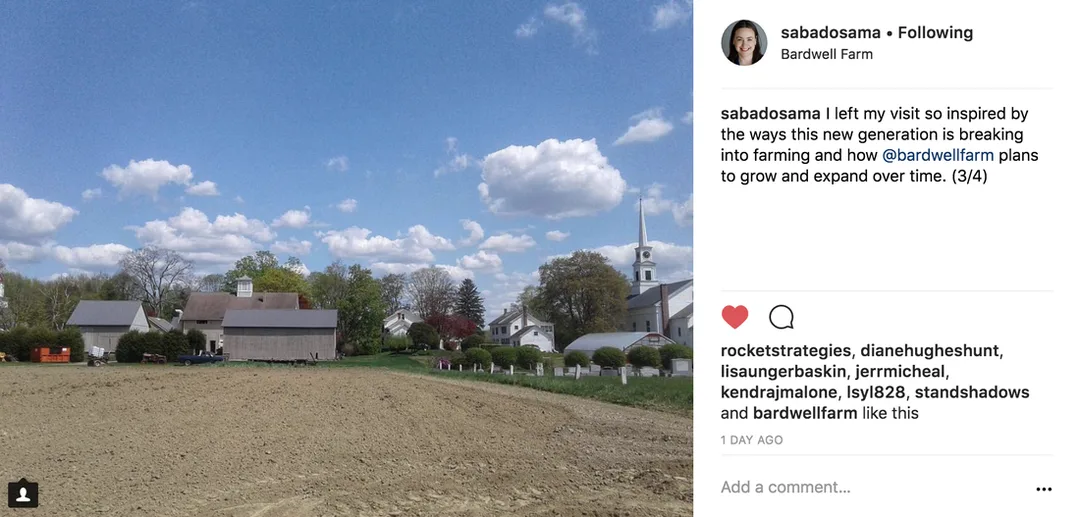
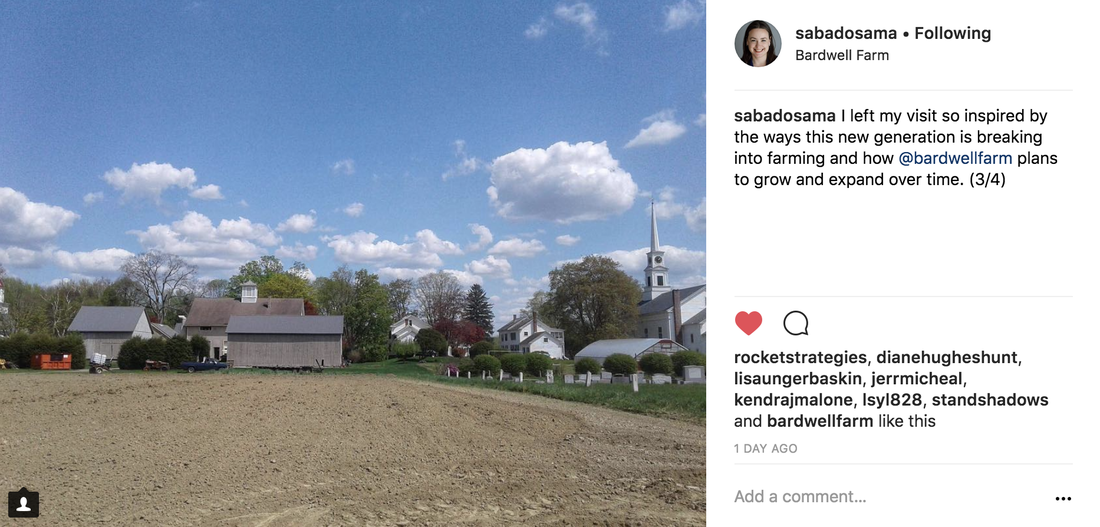
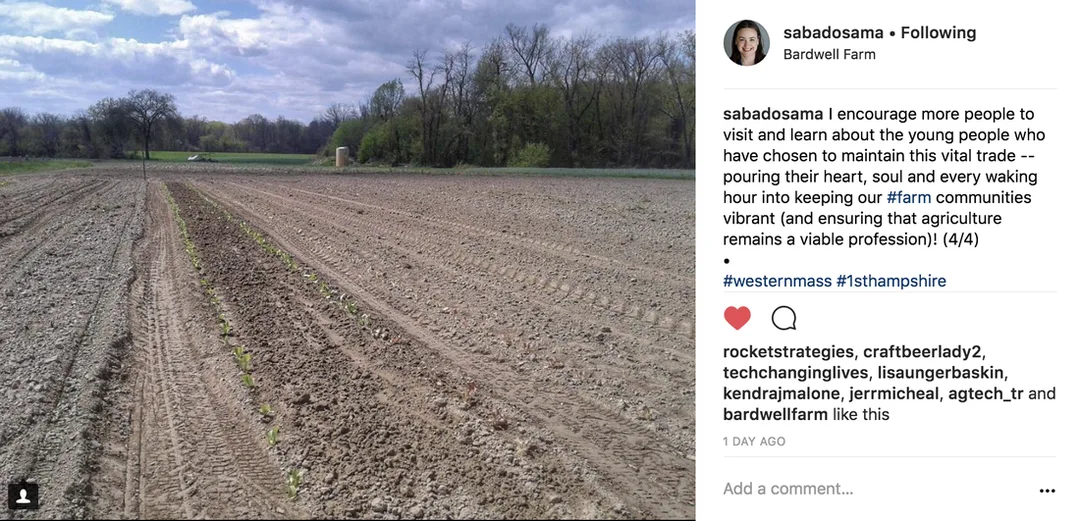
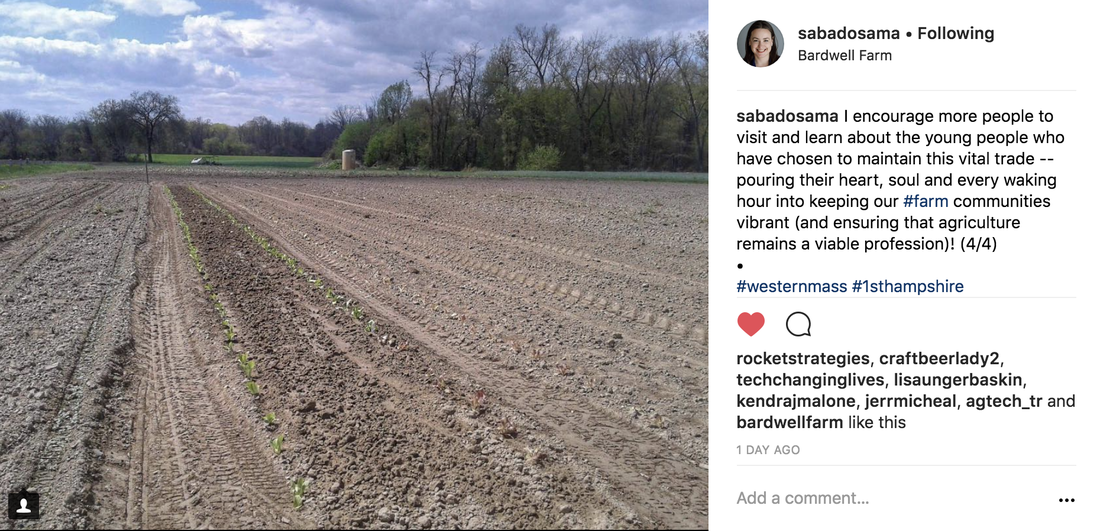
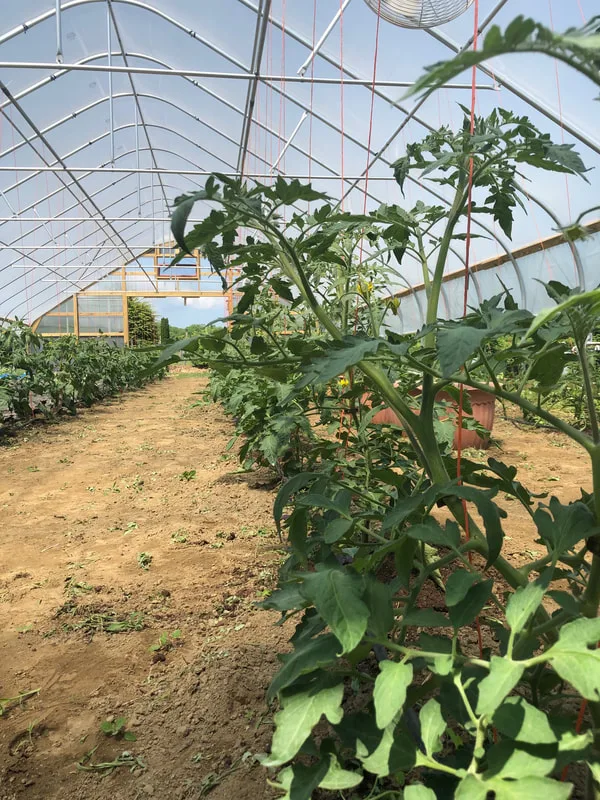
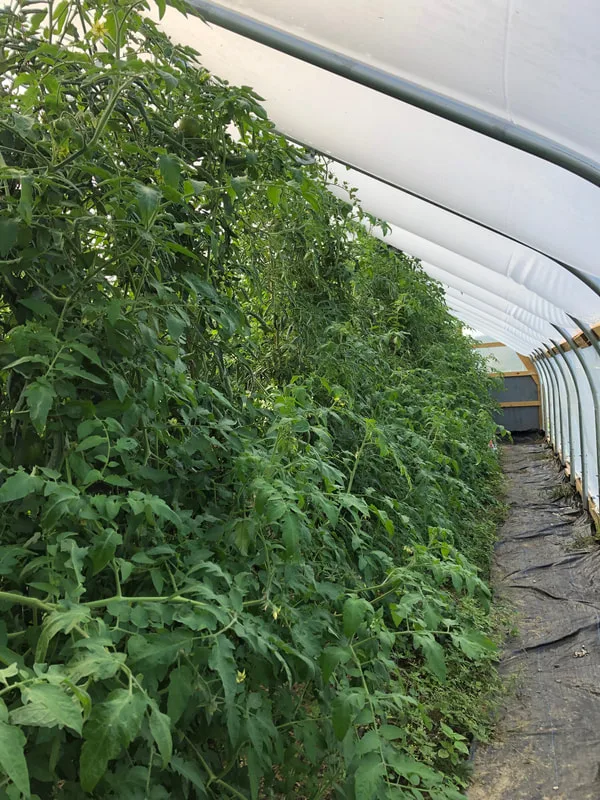
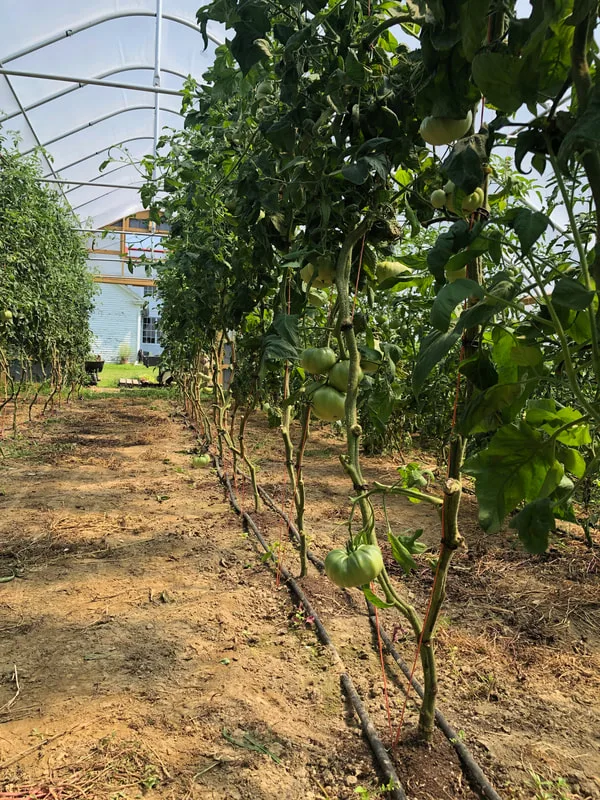
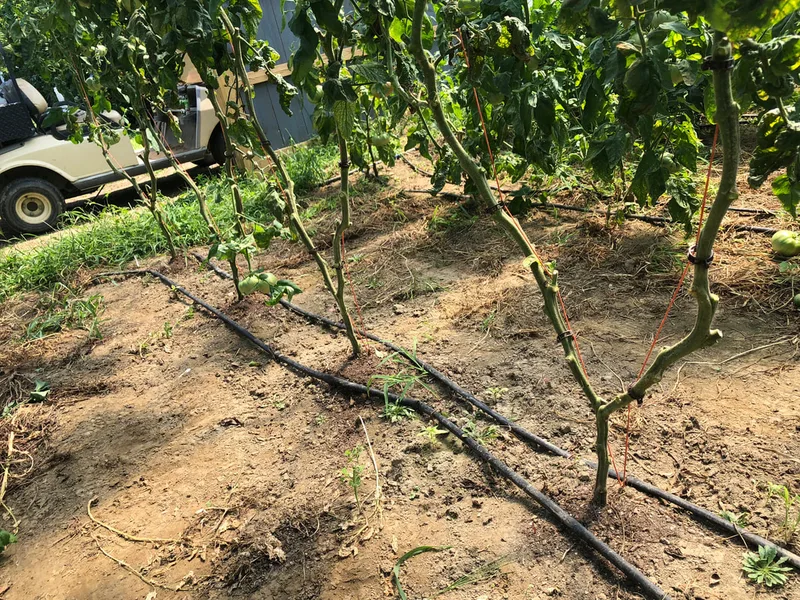
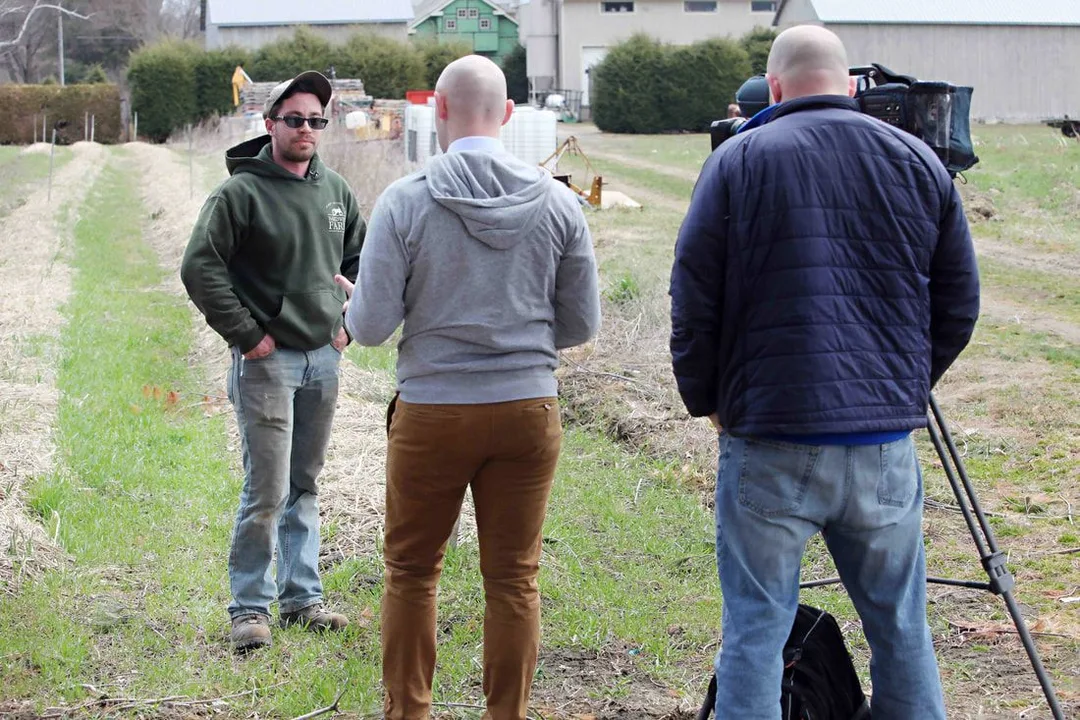
In the spring of last year we were contacted by UMass student Isabel Brofsky to participate in a bird and vegetation study. We were excited and jumped at the opportunity and invited Isabel to our farm.
After several visits and rounds of study she presented us with her analysis and it was pretty amazing! We were surprised at the diversity of birds our little farm hosted.
Have a look at the report it's an invaluable insight for us farmers and interesting information that we don’t typically think of.
A big thank you to Isabel and her team for including us in her important work!
Bird & Vegetation Study: Bardwell Farm
Isabel Brofsky, MS Student
Department of Environmental Conservation, University of Massachusetts Amherst
After several visits and rounds of study she presented us with her analysis and it was pretty amazing! We were surprised at the diversity of birds our little farm hosted.
Have a look at the report it's an invaluable insight for us farmers and interesting information that we don’t typically think of.
A big thank you to Isabel and her team for including us in her important work!
Bird & Vegetation Study: Bardwell Farm
Isabel Brofsky, MS Student
Department of Environmental Conservation, University of Massachusetts Amherst
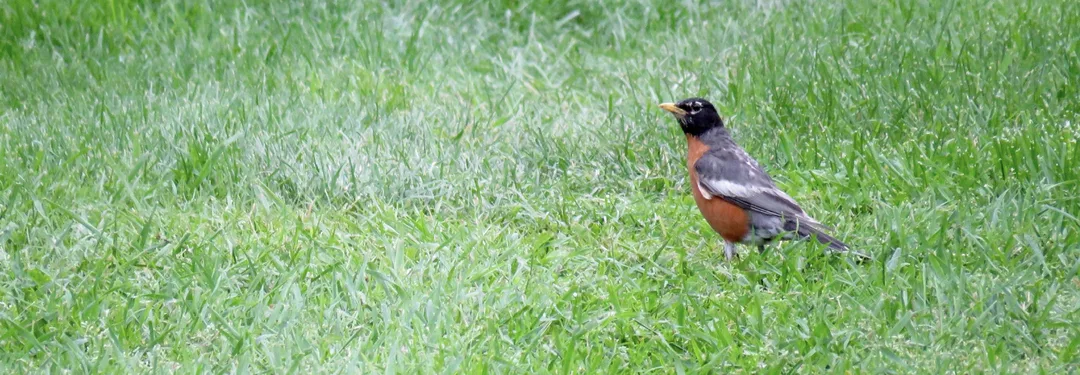
This American Robin became a familiar sight as the season went on. I was able to recognize it individually because of the unique white patches on its wings, caused by a genetic mutation known as leucism.
Field Season Review
The purpose of this field season was to collect data on the abundance and species diversity of birds and quantify their habitats. I completed three rounds of bird surveys over the course of the summer, each time performing 10-minute standardized point counts of all birds within a 50-meter radius. During each point count I recorded the number and species of birds I observed, as well as which habitats they were occupying and any feeding or breeding behaviors they were exhibiting. I also conducted two rounds of habitat surveys, which I completed by dividing the area of the 50-meter radius point count circle into distinct land cover types (i.e.orchard, cover crop, woodland, etc.) and measuring the height
and density of the vegetation and identifying the plants present throughout each land cover type. I began these surveys in around late May and finished in mid-July to coincide with the breeding season of most species in this region.
Highlights of the Field Season
Not only was Bardwell Farm one of the smallest farms I surveyed over the course of the summer, it also was located in one of the most developed or suburban areas that I visited. Because of these two points, I did not anticipate Bardwell having a very long species list. I was, however, proved totally wrong. With a list of 40 bird species and a total of 225 individuals, Bardwell was a remarkably diverse and unique farm that surpassed my expectations. Due to Bardwell’s more suburban surroundings, I observed a number of species that are uniquely adapted to human-altered habitats. Chimney Swifts were a common aerial visitor, as well as Rock Pigeon and Eastern Kingbird. On my very first visit to the farm, I observed a pair of Redtailed Hawks perched and calling from the top of one of the trees on the edge of the farm. Although I didn’t see them on any subsequent visits, I wouldn’t be surprised if they nested somewhere nearby. The only Canada Geese I saw at any farm all season long were in the grassy fields adjacent to the farm.
The purpose of this field season was to collect data on the abundance and species diversity of birds and quantify their habitats. I completed three rounds of bird surveys over the course of the summer, each time performing 10-minute standardized point counts of all birds within a 50-meter radius. During each point count I recorded the number and species of birds I observed, as well as which habitats they were occupying and any feeding or breeding behaviors they were exhibiting. I also conducted two rounds of habitat surveys, which I completed by dividing the area of the 50-meter radius point count circle into distinct land cover types (i.e.orchard, cover crop, woodland, etc.) and measuring the height
and density of the vegetation and identifying the plants present throughout each land cover type. I began these surveys in around late May and finished in mid-July to coincide with the breeding season of most species in this region.
Highlights of the Field Season
Not only was Bardwell Farm one of the smallest farms I surveyed over the course of the summer, it also was located in one of the most developed or suburban areas that I visited. Because of these two points, I did not anticipate Bardwell having a very long species list. I was, however, proved totally wrong. With a list of 40 bird species and a total of 225 individuals, Bardwell was a remarkably diverse and unique farm that surpassed my expectations. Due to Bardwell’s more suburban surroundings, I observed a number of species that are uniquely adapted to human-altered habitats. Chimney Swifts were a common aerial visitor, as well as Rock Pigeon and Eastern Kingbird. On my very first visit to the farm, I observed a pair of Redtailed Hawks perched and calling from the top of one of the trees on the edge of the farm. Although I didn’t see them on any subsequent visits, I wouldn’t be surprised if they nested somewhere nearby. The only Canada Geese I saw at any farm all season long were in the grassy fields adjacent to the farm.
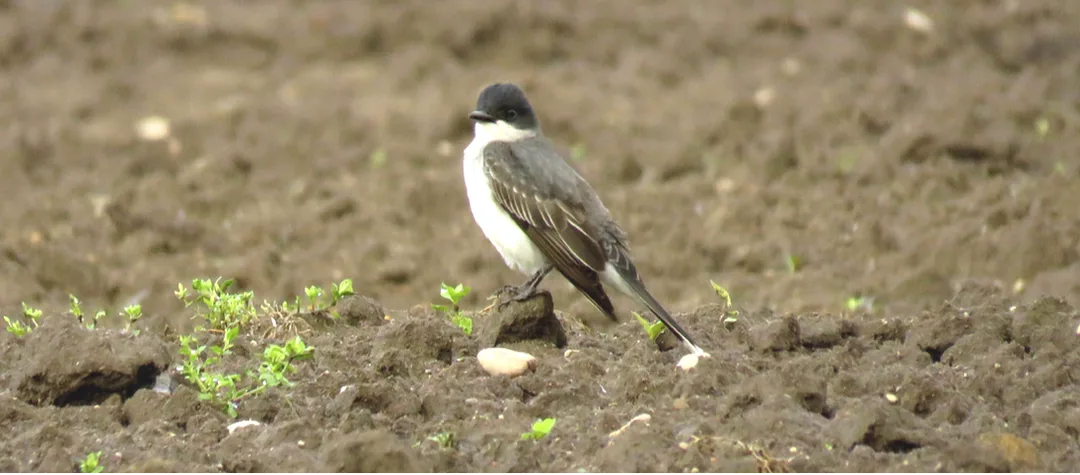
Eastern Kingbird
While many of the birds I recorded on and around the farm were suburban species, I also observed a diverse array of woodland and shrubland birds as well. The forested areas at the edge of the farm produced species such as Warbling Vireo, American Redstart, and Yellow Warbler. The big hickory tree near the main field was a magnet for songbirds. The list of species that I observed in that single tree includes Baltimore Oriole, Rose-breasted Grosbeak, Northern Cardinal, Downy Woodpecker, and Song Sparrow. As I have started my data analysis, Song Sparrows have become more and more of interest to my research. A common but declining species in the Northeast, Song Sparrows were present on small farms like Bardwell in higher densities than any other natural and managed habitats in this region. They were also one of the most common species that I observed feeding in and around
row crops, and because they feed primarily on insects during the breeding season, it is possible they are providing an ecosystem service in the form of insect pest control.
While many of the birds I recorded on and around the farm were suburban species, I also observed a diverse array of woodland and shrubland birds as well. The forested areas at the edge of the farm produced species such as Warbling Vireo, American Redstart, and Yellow Warbler. The big hickory tree near the main field was a magnet for songbirds. The list of species that I observed in that single tree includes Baltimore Oriole, Rose-breasted Grosbeak, Northern Cardinal, Downy Woodpecker, and Song Sparrow. As I have started my data analysis, Song Sparrows have become more and more of interest to my research. A common but declining species in the Northeast, Song Sparrows were present on small farms like Bardwell in higher densities than any other natural and managed habitats in this region. They were also one of the most common species that I observed feeding in and around
row crops, and because they feed primarily on insects during the breeding season, it is possible they are providing an ecosystem service in the form of insect pest control.
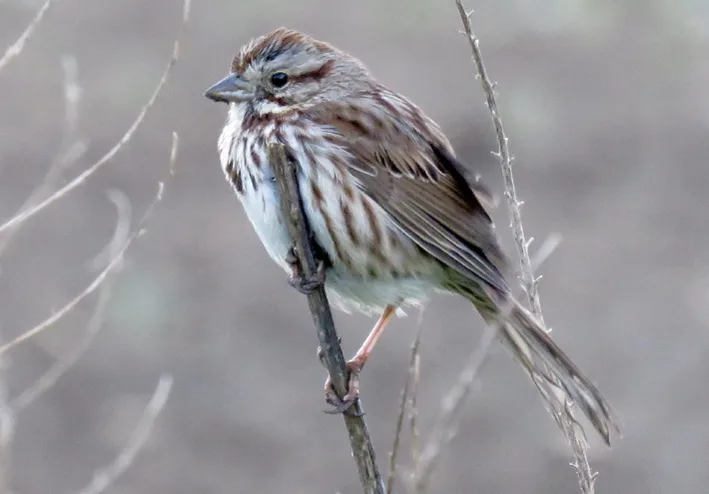
Song Sparrow
What’s Next
With a field season complete, my primary tasks were to enter all of my data into my computer and organize it so that it could be used in future data analyses. With that step finished, I have recently been working on some preliminary Song Sparrow analyses to determine the major habitat characteristics (vegetation height, density, cover of different habitat types, etc.) that are driving bird abundance and occurrence on these farms. I will also be preparing for a second field season this summer.
Species List
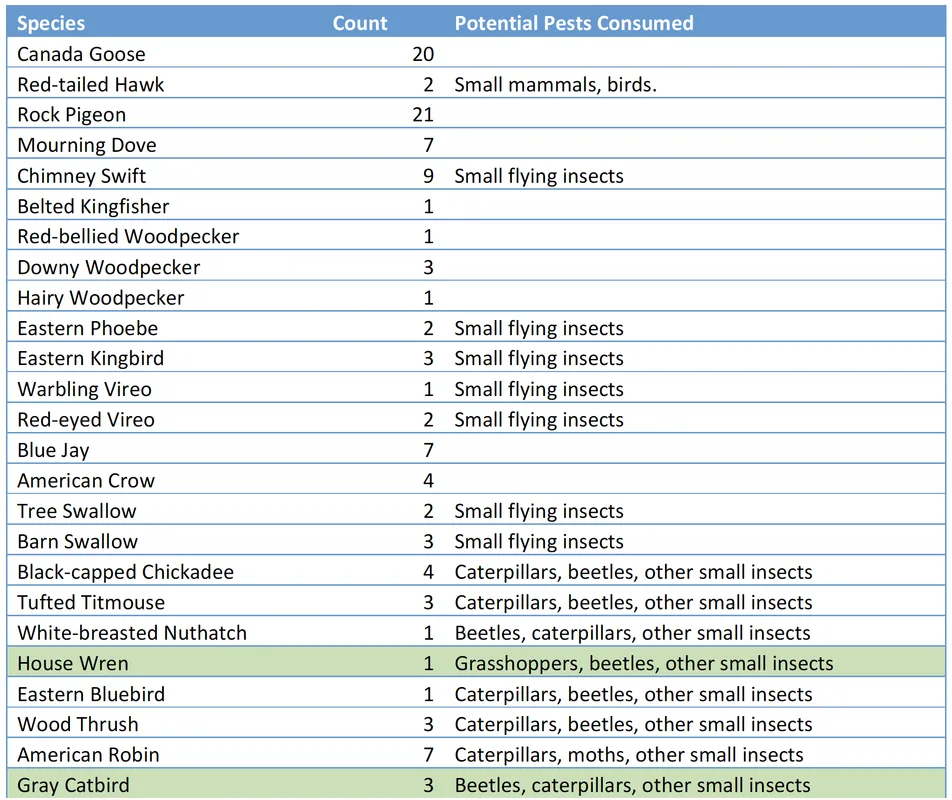
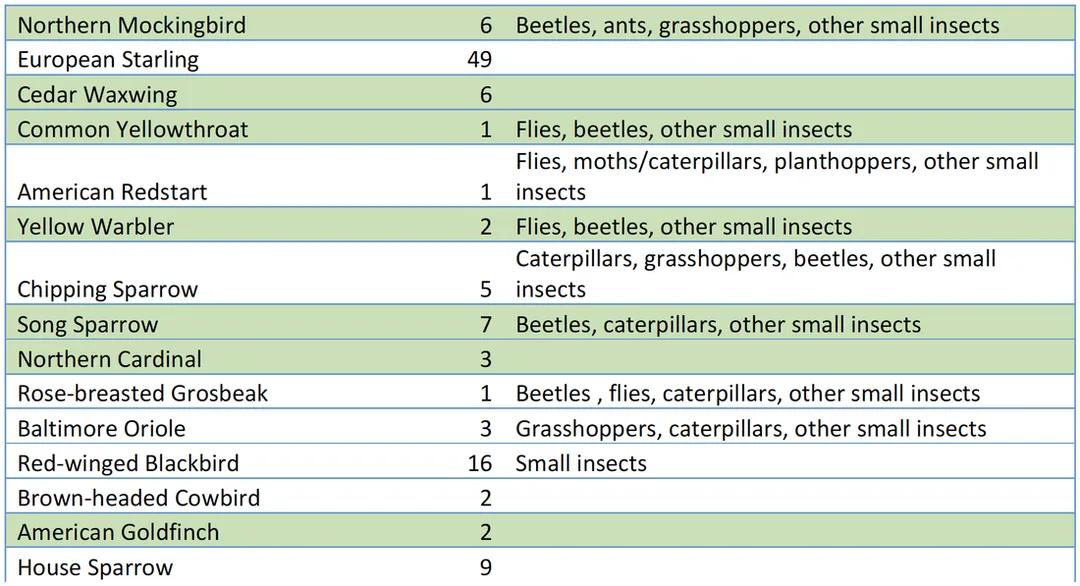
The following list includes all species observed or heard in and around the farm (not just those observed during 10-minute point counts) across the combined three visits. I have highlighted shrubland birds in green because many of these species are declining in this region due to habitat loss and their presence on these farms is of interest to my project. Another of my interests is the extent to which birds are feeding on farm pests, so I have also included a brief description of the diets of potentially beneficial species. Here I define a beneficial species as one whose diet during the breeding season is composed of over 50% animal and/or insect matter and whose feeding behavior would allow it to potentially feed on a farm pest.Bir
What’s Next
With a field season complete, my primary tasks were to enter all of my data into my computer and organize it so that it could be used in future data analyses. With that step finished, I have recently been working on some preliminary Song Sparrow analyses to determine the major habitat characteristics (vegetation height, density, cover of different habitat types, etc.) that are driving bird abundance and occurrence on these farms. I will also be preparing for a second field season this summer.
Species List
The following list includes all species observed or heard in and around the farm (not just those observed during 10-minute point counts) across the combined three visits. I have highlighted shrubland birds in green because many of these species are declining in this region due to habitat loss and their presence on these farms is of interest to my project. Another of my interests is the extent to which birds are feeding on farm pests, so I have also included a brief description of the diets of potentially beneficial species. Here I define a beneficial species as one whose diet during the breeding season is composed of over 50% animal and/or insect matter and whose feeding behavior would allow it to potentially feed on a farm pest.Bir