• Published on

    Thank you!

    Picture
    It’s middle November here at Bardwell Farm, the fields have been put to bed, equipment washed and stored in the barns, and the farmstand has been officially rolled away to complete another season. 

    It’s a bittersweet time of the year for us. We’re sad that the season is over but excited and hopeful for a new one to come. It’s also a time that we reflect on the season and think of all the things we are thankful for.

    We are so thankful for the Earth, providing us with healthy soils and beautiful farm land to grow our crops on. As many of you know the 2018 season was a struggle in many ways. It was difficult to grow and maintain our mainstay crops. Many times we were at the mercy of Mother Nature, fighting the persistent heat and humidity, the deluge of rain and the stubborn cold. We did our best to bring you the best quality product the land and elements had to offer. With the help of family and friends (and a little luck too) we persevered.  
     
    As Bardwell Farm approaches its sixth season we are “Farm to Table” committed by offering several ways to access our fresh veggies. Whether it’s through our farmstand, a CSA Farm Share, or our trusted delivery system, it’s our promise to support our local community!

    I personally would like to take a moment to thank all our valued customers who have come back year after year, and to those that took a chance on a new farm they were not familiar with. Thank you for giving our fruits and vegetables a try. This farm would not be here without the support we receive from you each year and for that we are extremely thankful.

    Even though we are closed for the season, stay up to date by visiting our blog and social media. Exciting things will be happening in Season 2019!

    Happy Thanksgiving to everyone, we will see you soon!

    Owner Harrison Bardwell
  • Published on

    We Made Vegetable Notes!

    From the UMass Extension:

    November 15, 2018
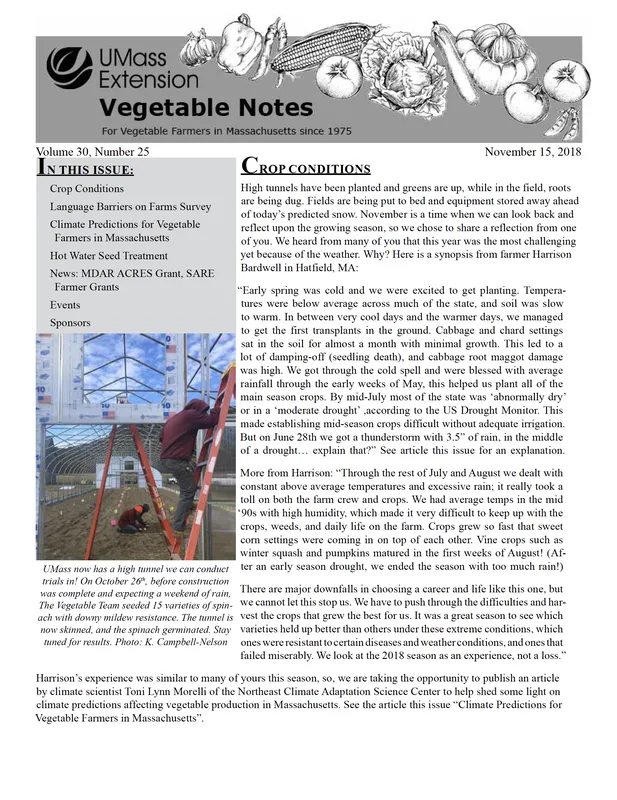
    CROP CONDITIONS
    High tunnels have been planted and greens are up, while in the field, roots are being dug. Fields are being put to bed and equipment stored away ahead of today’s predicted snow. November is a time when we can look back and reflect upon the growing season, so we chose to share a reflection from one of you. We heard from many of you that this year was the most challenging yet because of the weather. Why? Here is a synopsis from farmer Harrison Bardwell in Hatfield, MA.
    ​Blog Reference:
  • Published on

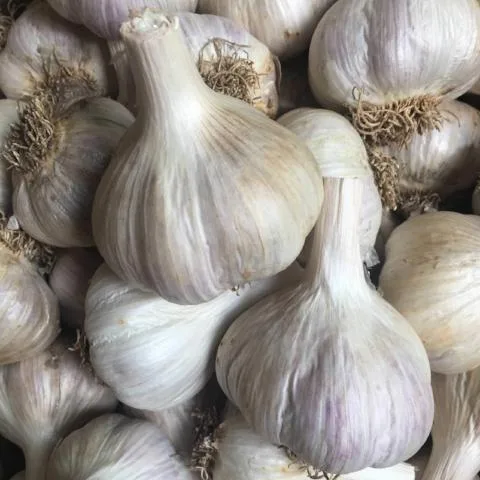
    Time to Plant Garlic!

    Garlic is an herb in the allium family, such as leeks and onions and it originates from the region of Siberia. Some say it has traveled across the world over 5000 years ago and is used for many culinary and medicinal purposes. Garlic has been cultivated for so many years that we have taken its ability to make seed. So we now propagate the cloves as seed to produce new cloves every year, just like the potato.

    There are two types of garlic that is grown, hard-neck and soft neck garlic varieties.

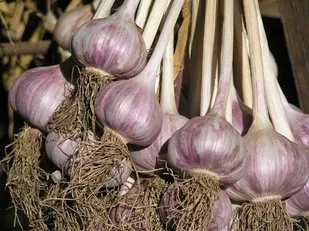
    Hardneck (or topset) garlic produces false flower stalks called scapes, which are edible and you can find them on our farm stand in June. Hardneck typically has a half dozen cloves per bulb. Many farmers prefer hard-neck for its flavor and appearance. These varieties if stored properly can keep up to 6 months.

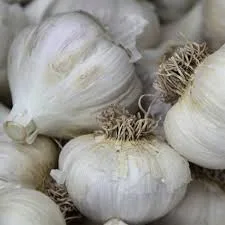
    Softneck garlic, which has more than twice as many cloves, generally has a longer storage life than hardneck and is easier to braid. These are typically a nice white color vs. the hard-neck which usually has a red/purple tint to their wrappers.
    On our farm we grow hard-neck varieties. Now you thought two different types of garlic was interesting, I'm going to delve farther into the story. Hard- neck varieties can be categorized into two different groups: Porcelain, Rocambole, and Purple Stripe.

    Rocambole
    This variety has a rich, full-bodied taste. It peels easily and typically has just one set of cloves around the woody stalk. It keeps for up to six months.

    Porcelain
    Porcelain garlic is similar to Rocambole in flavor and typically contains about four large cloves wrapped in a very smooth, white, papery sheath. People often mistake porcelain garlic for elephant garlic because its cloves are so large. Porcelain garlic stores well for about eight months.

    Purple stripe
    This hardneck variety is famous for making the best baked garlic. There are several types of purple stripe, all with distinctive bright purple streaks on their papery sheaths. Purple stripe garlic keeps for about six months.
    We decided to try out four different varieties of garlic this season to share with you next summer!

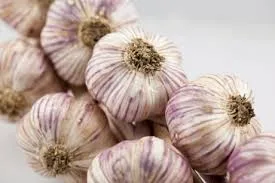
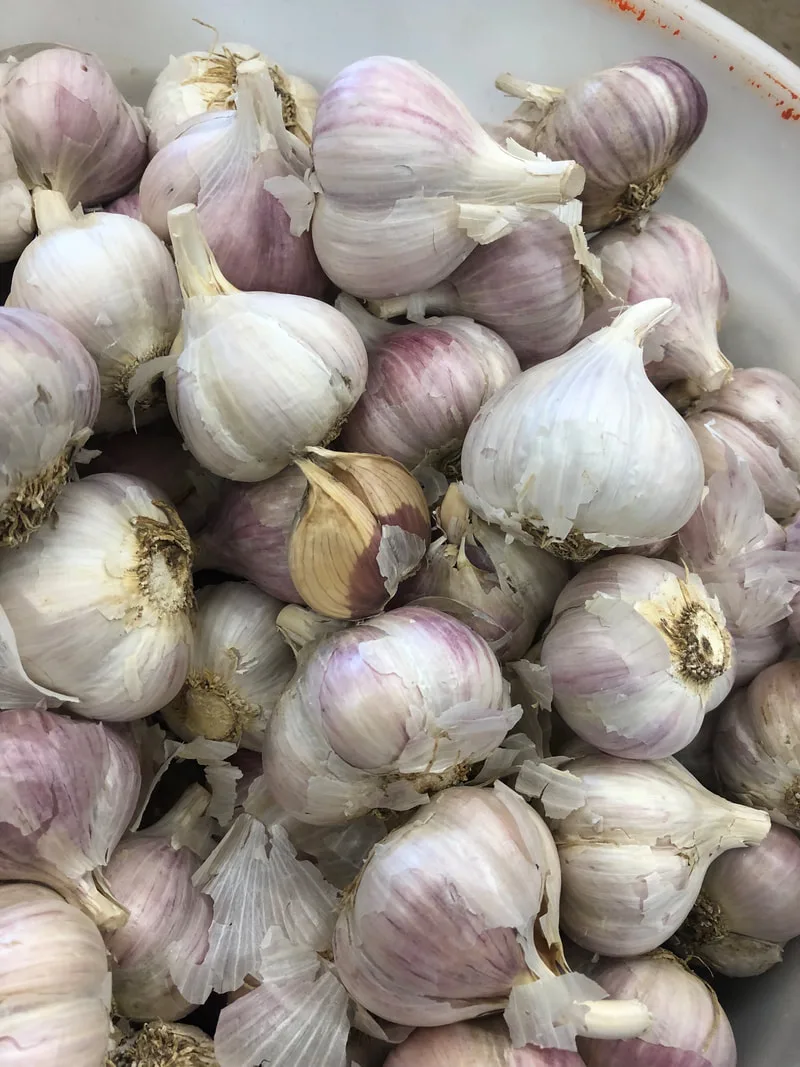
    First off, German White, a porcelain hardneck garlic that containing up to 6 big, easy-to-peel cloves. A beautiful garlic with creamy-white outer bulb wrappers, and often purple striped inner wrappers, that tend to be thick, parchment-like, and tightly cover the cloves. It is richly flavored with a distinctive, moderately spicy taste. Plump cloves make it a great roasting variety.

    Next, Russian Red, a member of the Rocambole family, Russian Red offers a strong garlic flavor. When it is eaten raw it can be described as being "hot". The clove wrappers are brown and purple and the bulb wrappers are purple.

    Music is a hardneck garlic, generally regarded as the most prized porcelain type. It produces very large bulbs; the white wrappers have some pink tint and purple striping.

    Lastly, Spanish Red is a generally a vigorous grower with large foliage that is dark green and results in a pretty good sized bulb. Being a Rocambole garlic, its flavor is very strong, hot and spicy and sticks around for a long time. It seems to have an especially rich taste.
    Picture

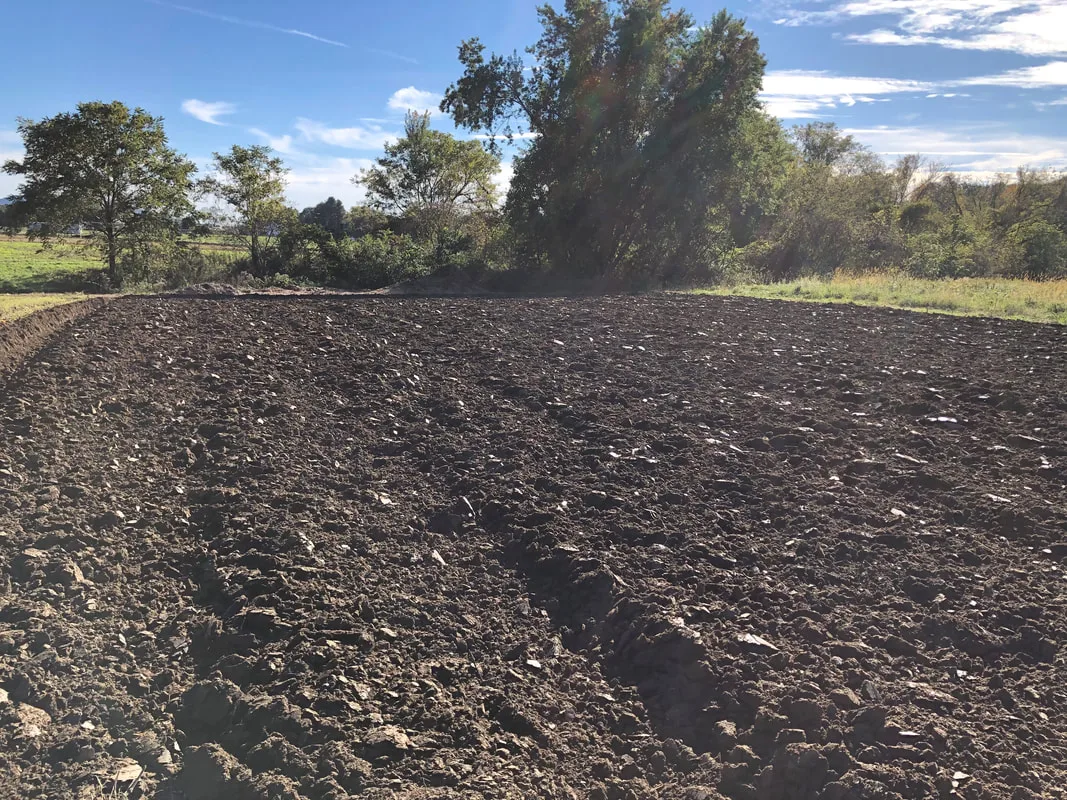
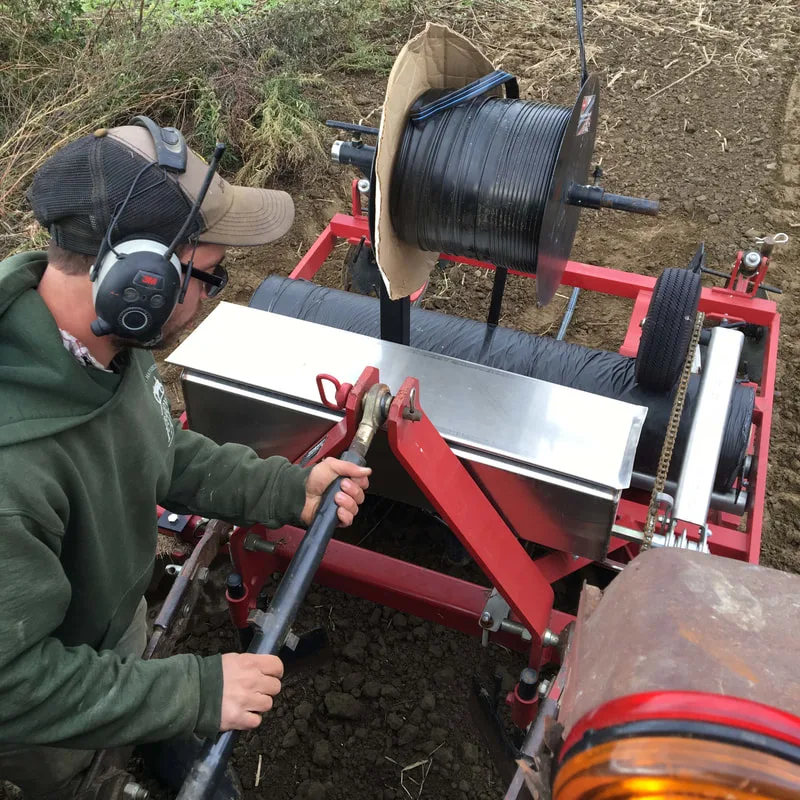
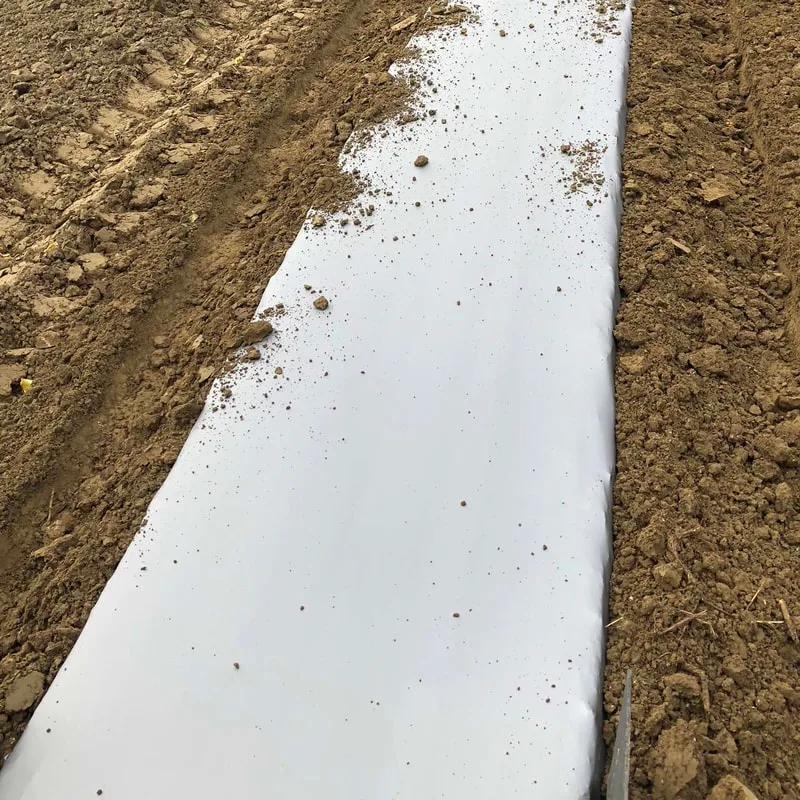
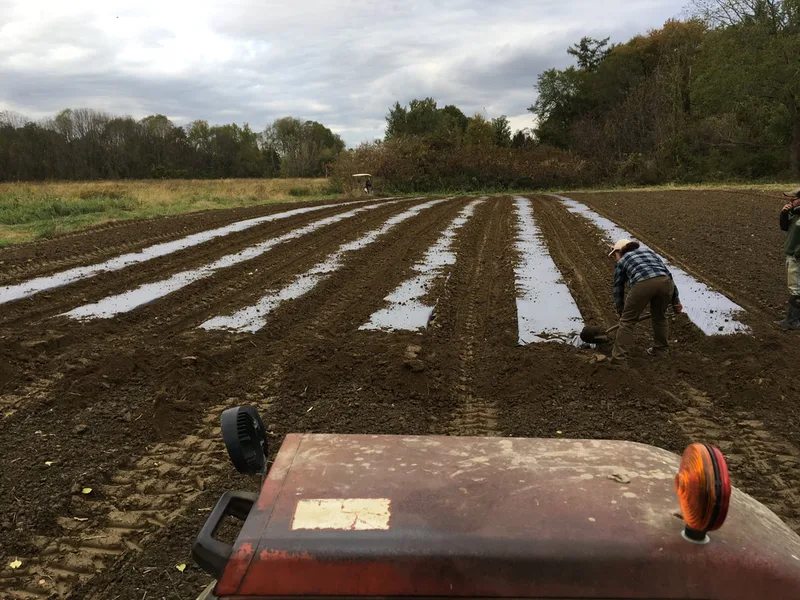
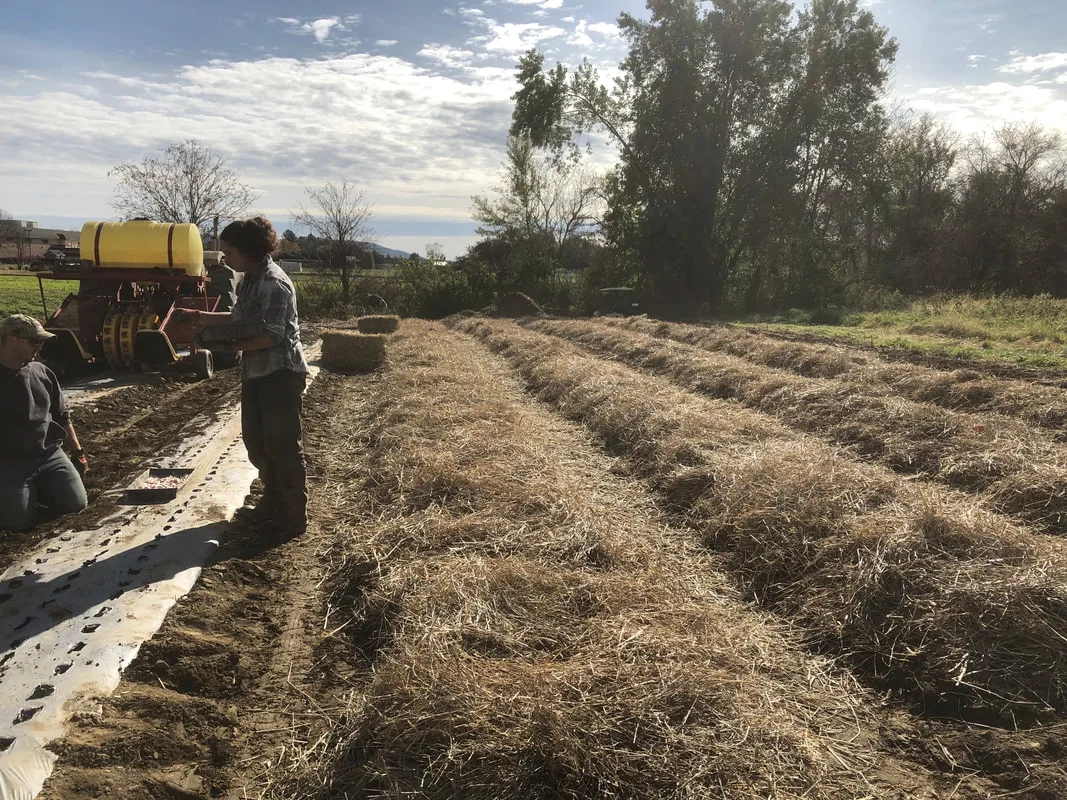
    Field prepped for garlic | Photo Bardwell Farm
    Now lets talk planting. It all starts with the very bulbs we consume for our cooking needs. The nicest, biggest, strongest bulbs typically get chosen for seed garlic. Weird huh? But yes, these will produce you nicest cloves when we harvest! 

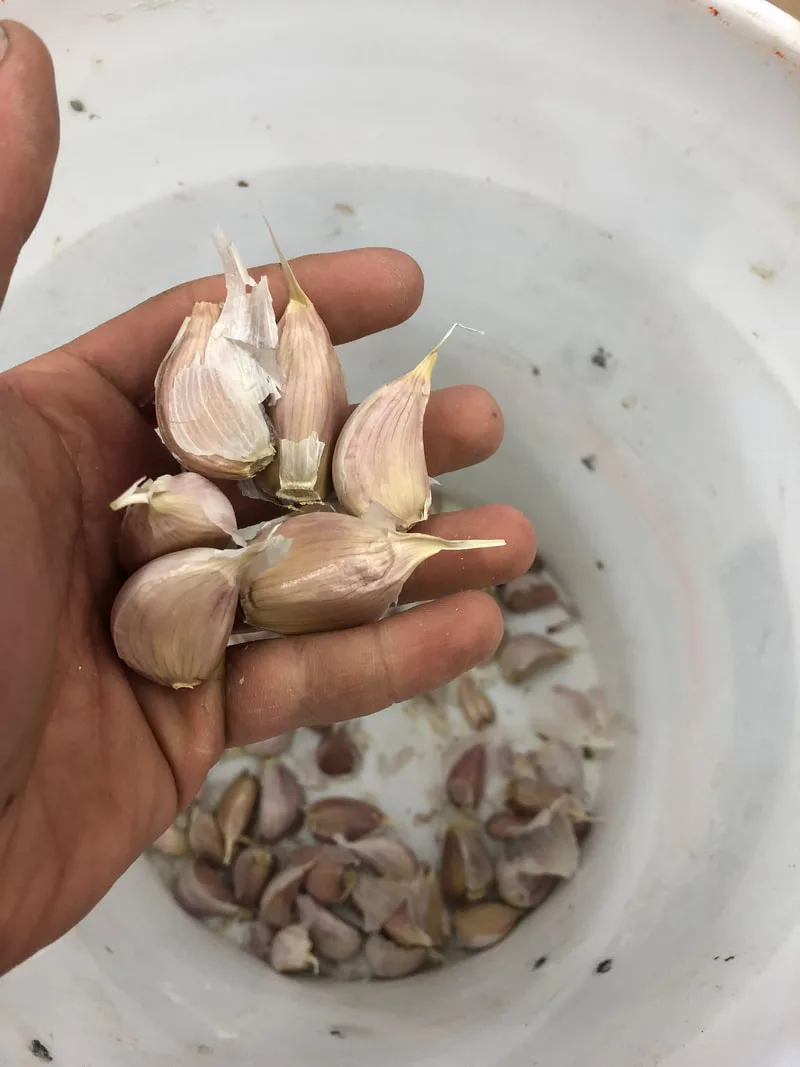
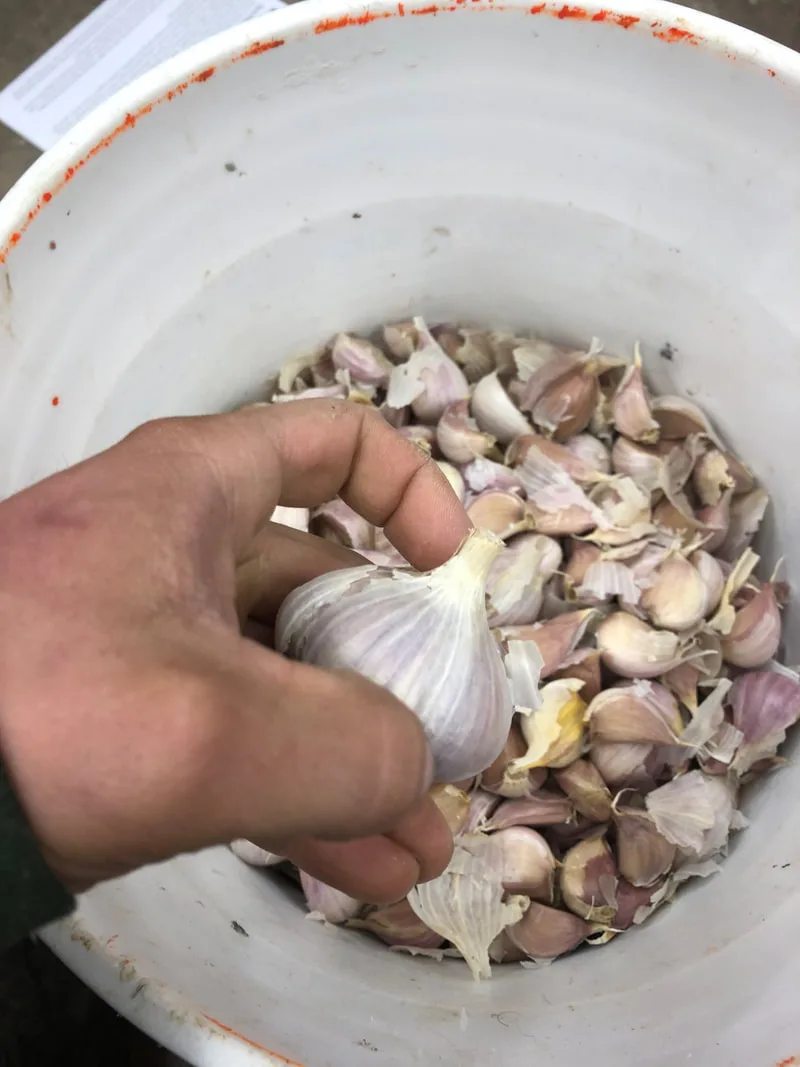
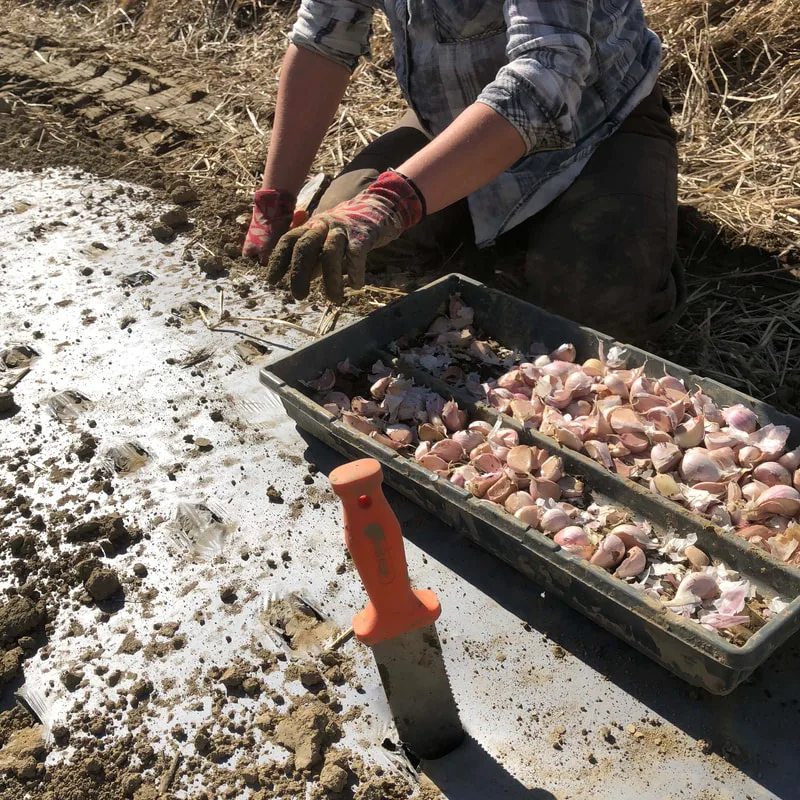
    We start by breaking the bulbs apart into individual cloves like you would to cook with but we are saving to plant into the ground. We don't want to let them sit like this for very long because they can dry out and not germinate once planted. So yes, we break hundreds of bulbs apart to get the cloves!
    Lets take a quick peek at the field prep of garlic. There are many ways to plant and every year we try something a little different to see the best result.

    Garlic is traditionally grown on bare ground at 6" in row and 18-24" between rows. Our first year we did these cultural practices. Last season we tired bare ground raised beds. This season we are trying raised beds on silver plastic mulch.

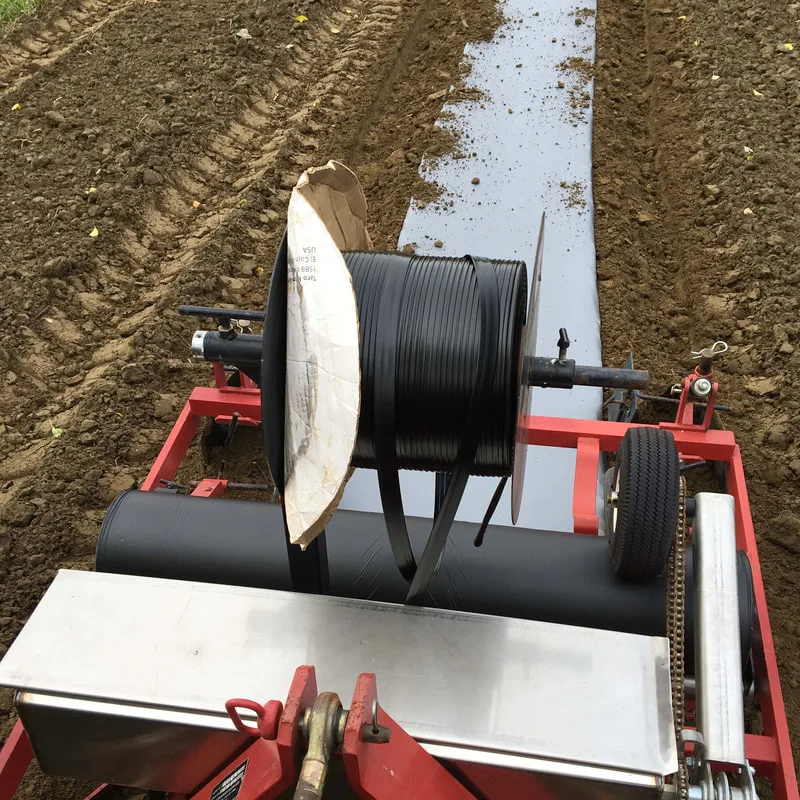
    We first prep the field with the amendments we need for the garlic growth and incorporate this. Next, we laid silver plastic with our bed shaper, this made a raised bed of plastic mulch. We decided to use silver plastic mulch for a few reasons:
    1. Weed suppression! Plastic is great for keeping weeds down.
    2. Silver plastic does not heat up soil fast like regular black plastic. We don't want warm soils in the fall because we want growth of the garlic, just enough to set a root and then go dormant thru the winter to gets its cold treatment. The silver plastic will keep the soils at a moderate temp.
    3. This plastic deters certain insects such as Thrips which can be a pest on the plant.
    4. This gives us the ability to use drip irrigation on the garlic which needs moist soils to grow along with nitrogen throughout the season which we can add through the drip line under the plastic. 
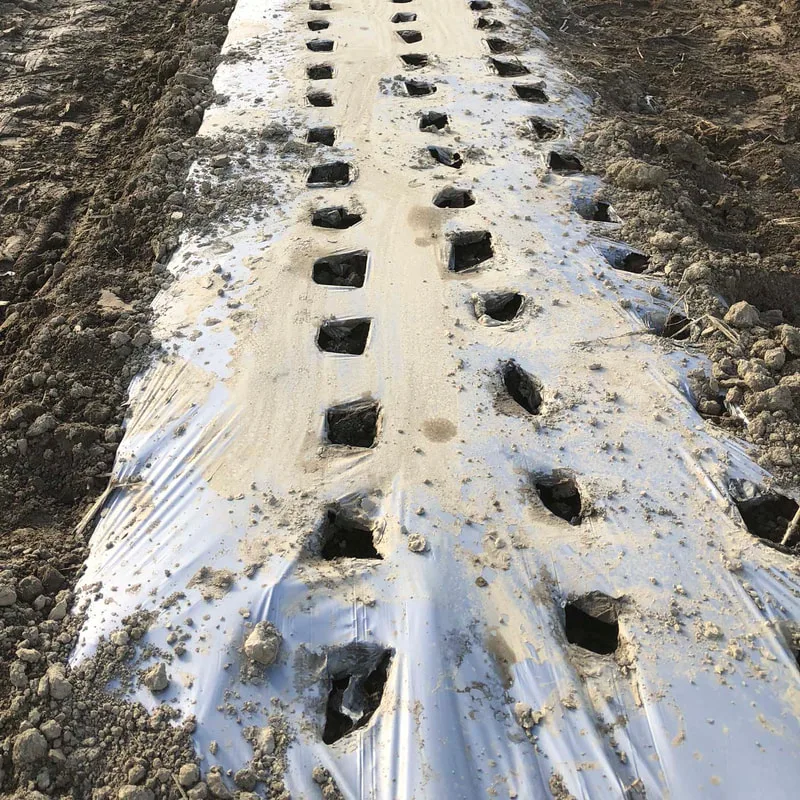
    Next, we use our transplanter and set it up to plant three rows per bed at 6" in row. This marks our spacings for each clove.

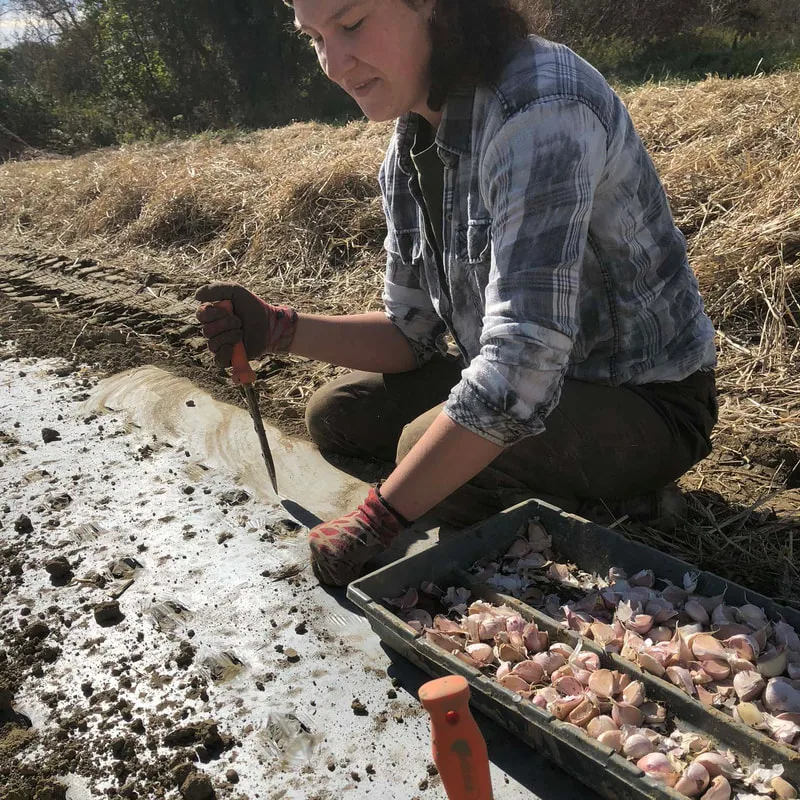
    Then we get on our hands and knees and plant over 5000 cloves by hand! It's tough to do any mechanical planting of garlic seed because in order to get a good yield you need to follow a few precessions. You have to make sure you plant your clove UPRIGHT. Meaning the part where the existing roots are need to face down to the soil. Cloves should also be planted 2-3" deep into the soil.
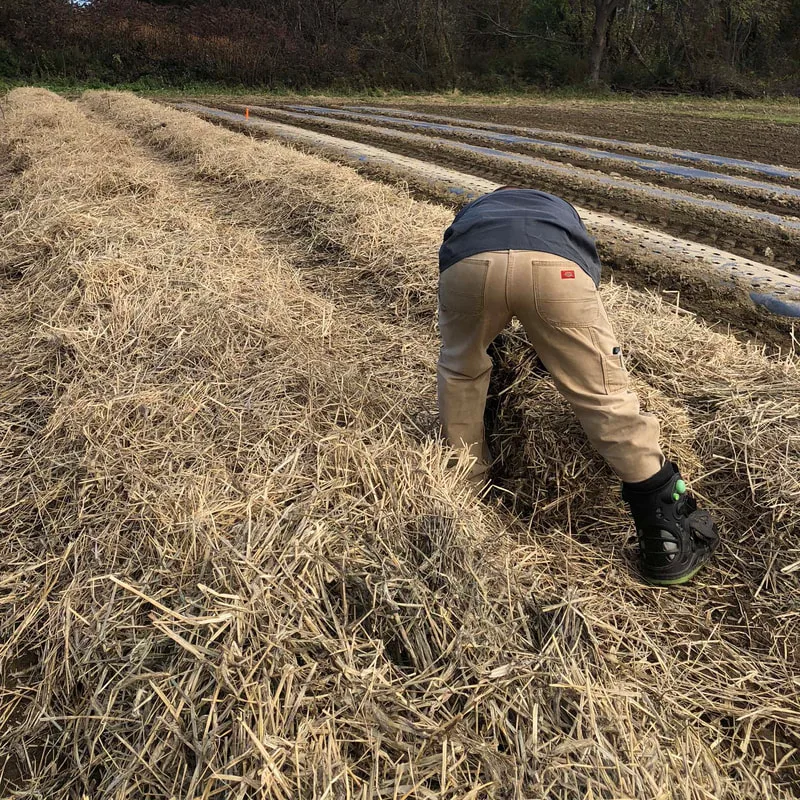
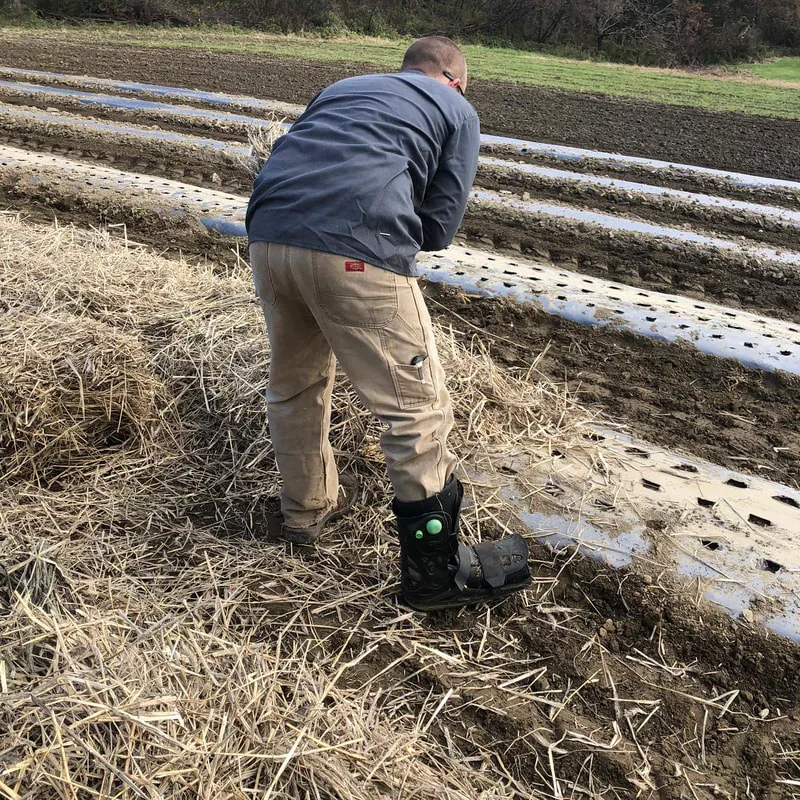
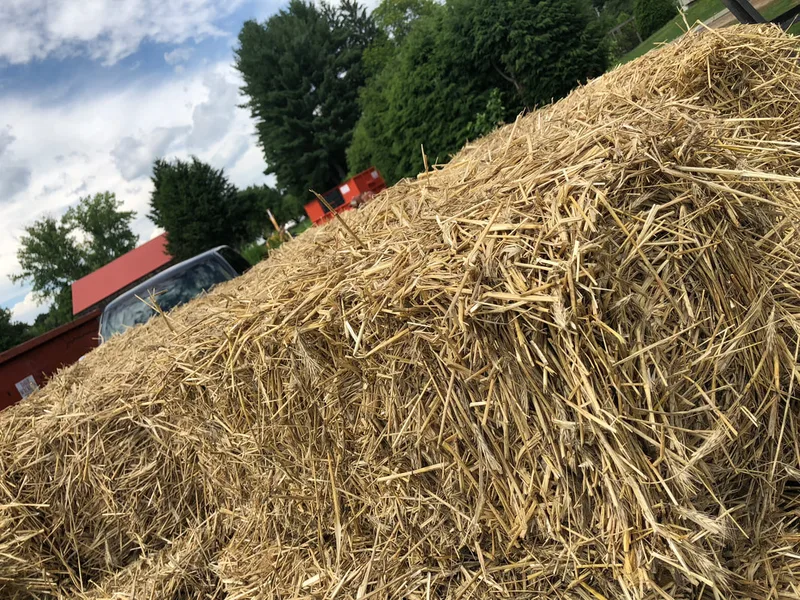
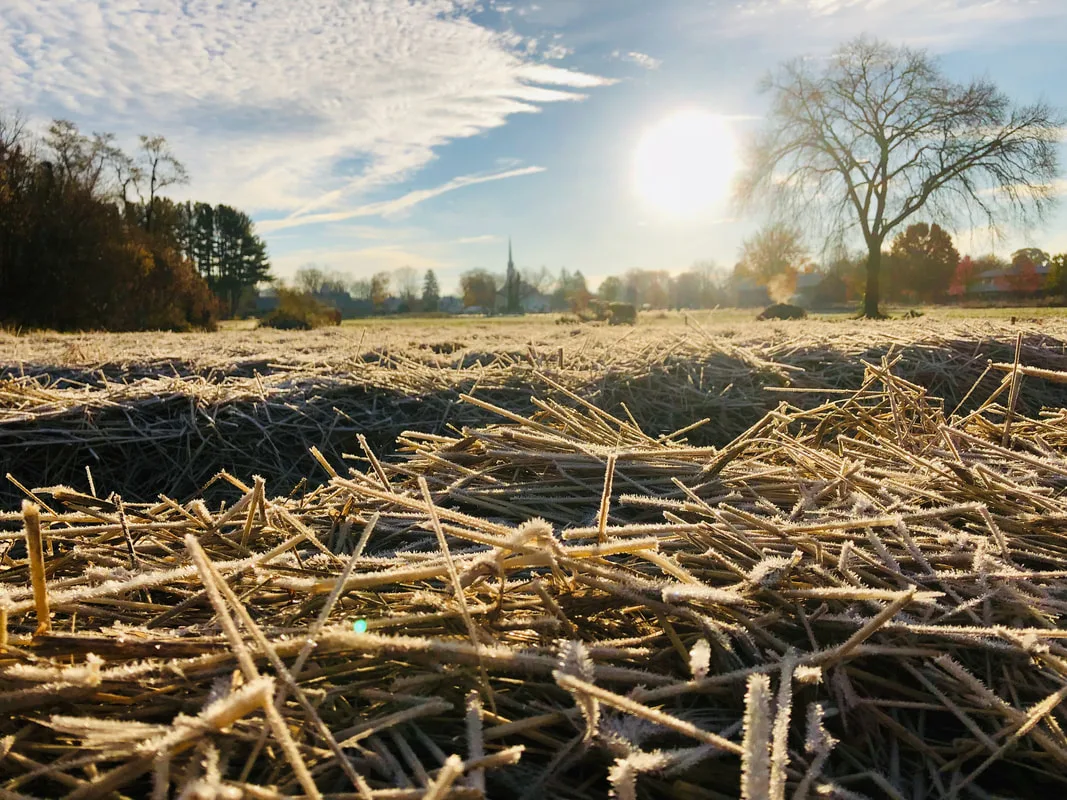
    The last steps with planting is laying down straw over the beds at about 4" depth. This helps keep the soil insulated over the winter and early spring to keep a more neutral temperature throughout the cold months to prevent frost heaving. It's also great for converting moisture and suppressing weeds in the field, since garlic isn't very good at fighting it's weed competition. 
    This is the last crop to be planted in the season and one of the first to come up. We have put it to bed for winter and it will see you in the spring! 

    As always, thanks for reading! 
    Picture

    Photo Bardwell Farm
  • Published on

    Barwell Farm CSA Farm Share Survey

    Create your own user feedback survey
  • Published on

    The 2018 Season, One to Remember

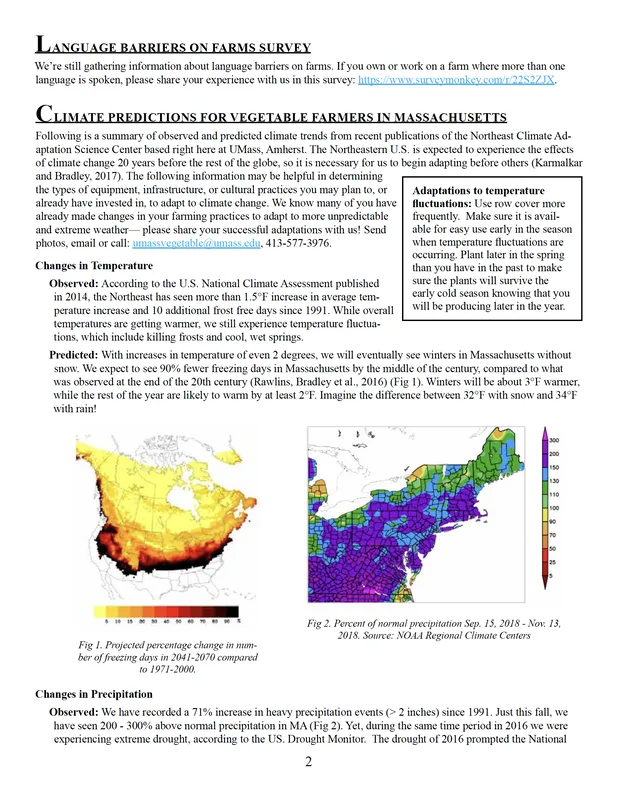
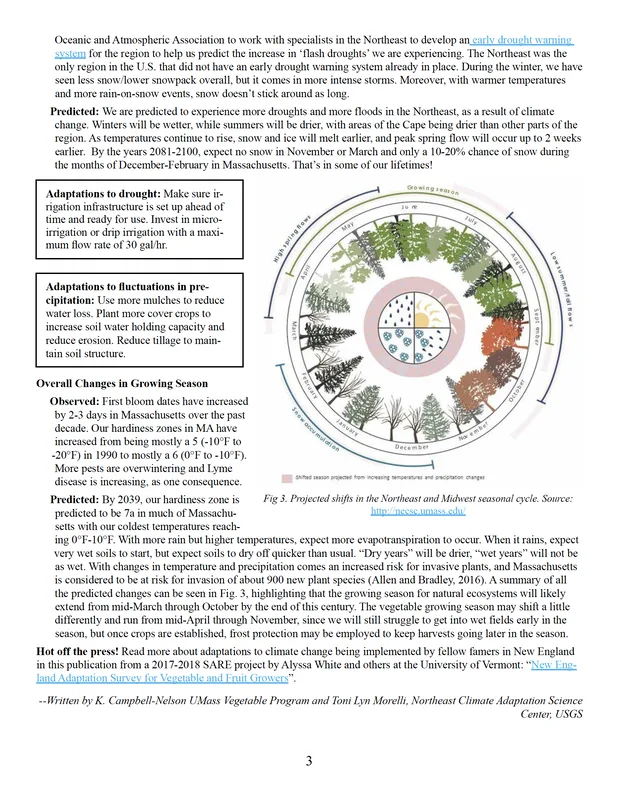
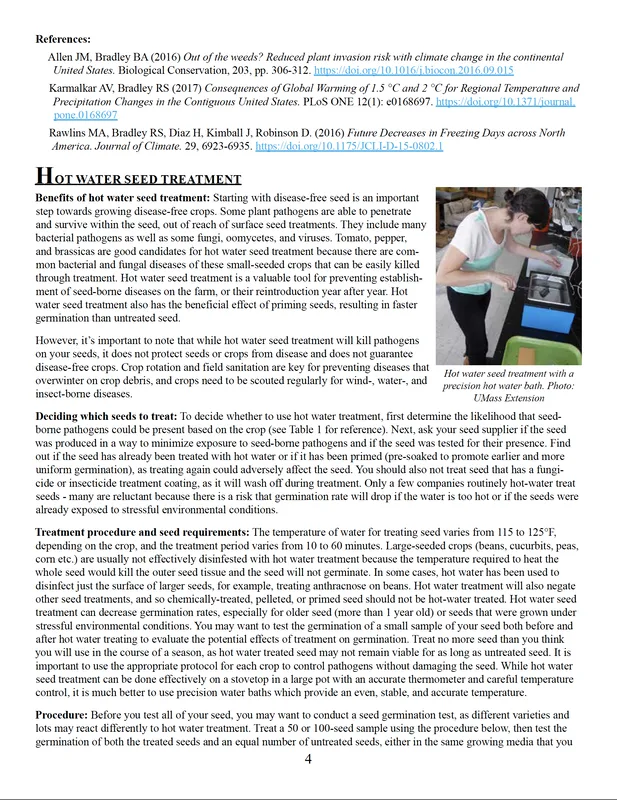
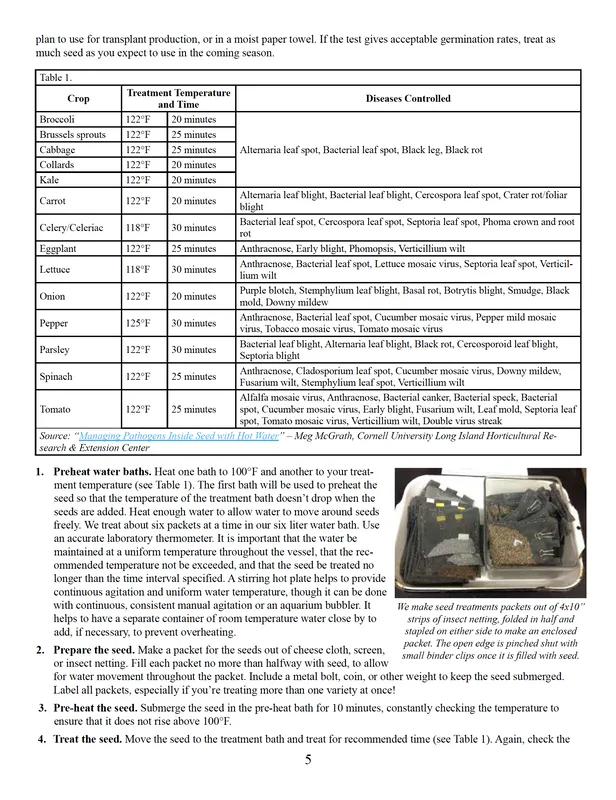
    It's nearing the bittersweet end of the growing season here at Bardwell Farm. We are cleaning up the rest of the winter squash out of the fields before the frost, taking up plastic, and putting all of the fields to bed. Seems like a normal routine right? You would think so, but area farmers behind the scenes have been having one heck of a time this year.
    We want to take some time in this blog to reflect, not negatively, but more to explain some of the difficulties of being at the mercy of Mother Nature during Season 2018.

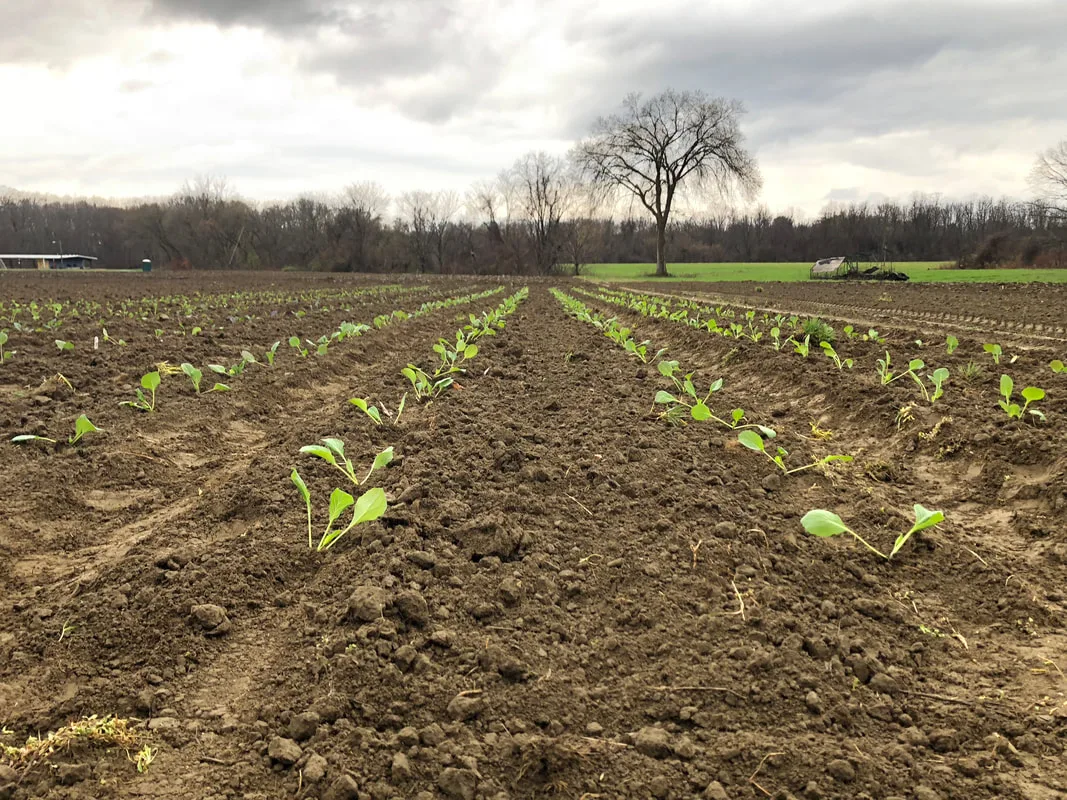
    Early spring was cold and we were excited to get planting. Temperatures were below average across much of the state which made warming soil temps difficult. In between very cool days and the warmer days, we managed to get the first transplants in the ground. Cabbage and chard settings sat in the soil for almost a month with minimal growth. This led to a lot of dampening-off (seedling death) and cabbage root maggot desiccation. A root maggot is an insect that eats the roots of crops such as cabbage, radish, and broccoli. 

    Below is a picture of the first setting of cabbage I'm talking about.
    Picture

    Cabbage planted April 29th, soil temperatures at 50 degrees

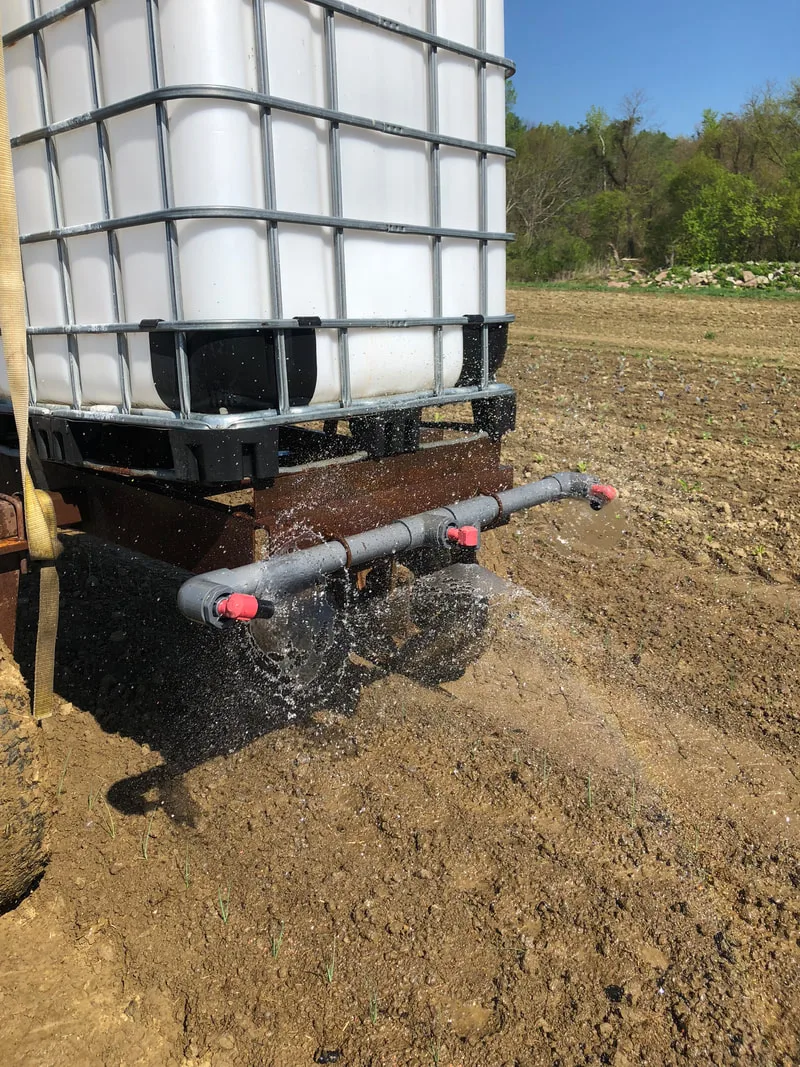
    We got through the cold spell and were blessed with average rainfall through the early weeks of May, this helped us plant all of the main season crops. We even had to irrigate here and there because there wasn't enough rain. Local farmers were saying it was almost drought conditions by this time. Below you can see me irrigating scallions. May is the month for planting and we sure nailed that!
    Picture
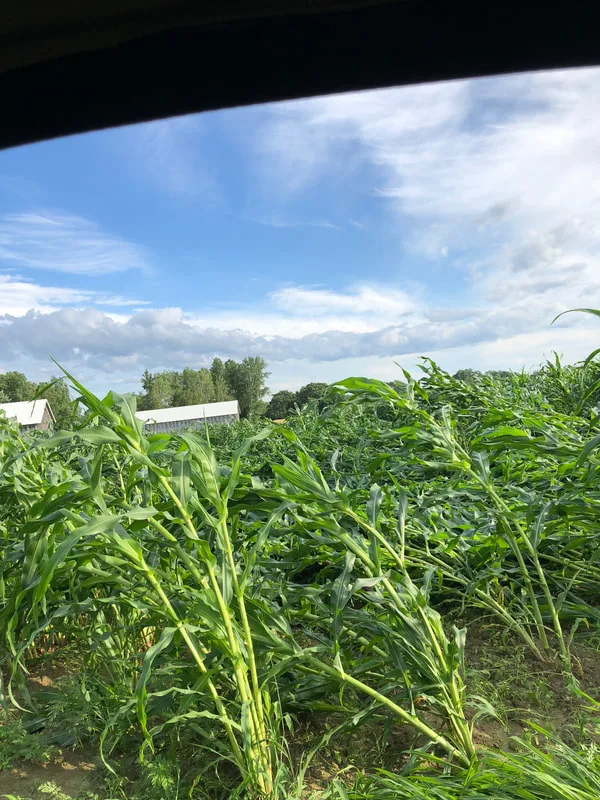
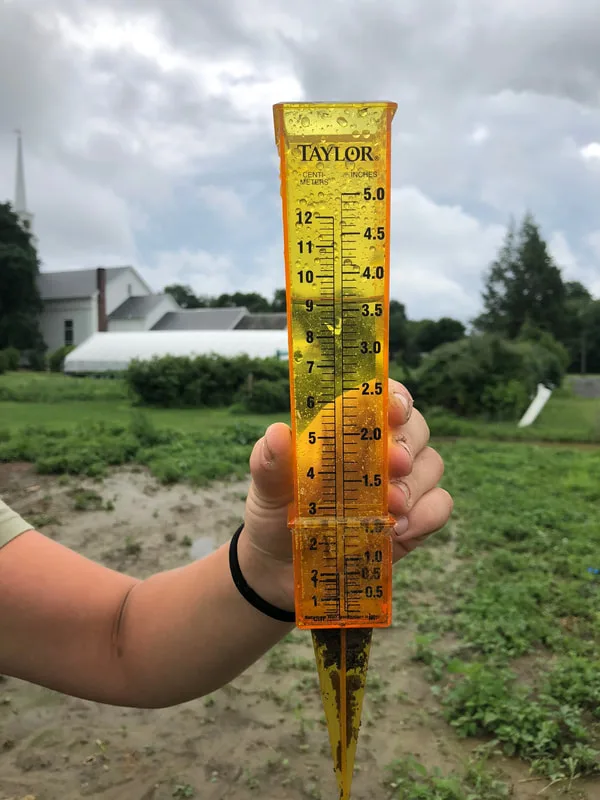
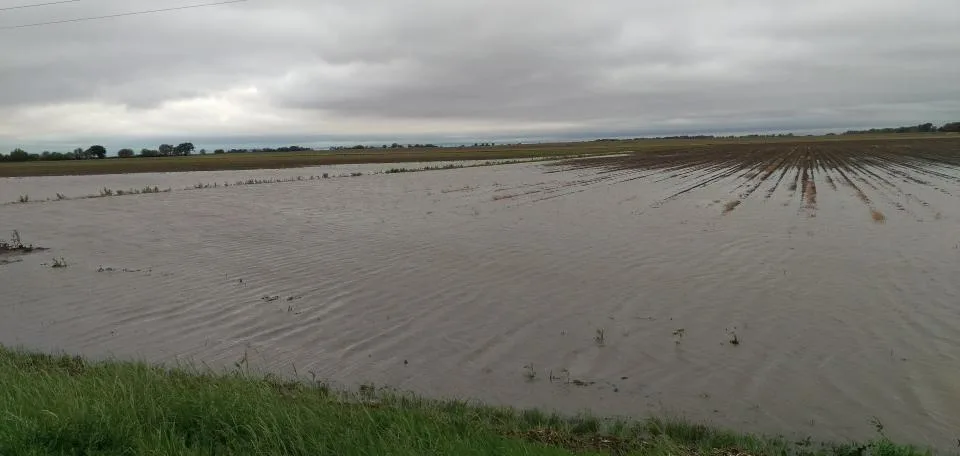
    Conditions were really good through most of June, then on June 19th is when things turned for the worse. June 28th started these crazy rain spells, getting 3.5" of rain in one day! Luckily crops were still in their smaller stage so not much damage was done. If you think about it though that's almost enough rain for a month in just one day! There are a few pictures below that demonstrate how the rain can effect crops in just one storm.
    Through the rest of July and August we dealt with constant above average temperatures and excessive rain, it really took a tole on both the farm crew and crops. We had average temps in the mid 90's with high humidity, which made work very difficult to keep up with the crops, weeds, and daily life on the farm.

    Crops grew so fast that sweet corn settings were coming in on top of each other. Vine crops such as winter squash and pumpkins matured in the first weeks of August! Winter squash and pumpkins are supposed to mature by mid September, but the hot humid weather we had pushed things along too quickly. These crops love the heat! Sometimes too much which can change harvest dates for crops that are more of a cool seasonal crop.

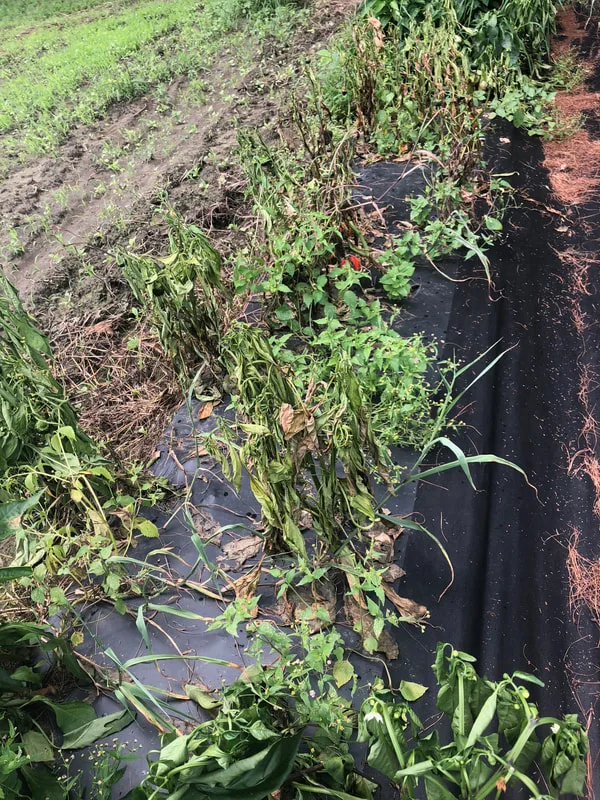
    Heat and humidity, coupled with the excessive rain, took a major tole. Crops just rotted in the soil they were planted in because of the amount of moisture in the ground and in the air. Many crops were lost and we experienced a major decrease in crop yields. The bottom line, too much rain!
    Picture

    Example of one of the many farm fields in the Valley flooded by excessive rain

    This season was also a struggle with pests, soil borne diseases, and weed control.

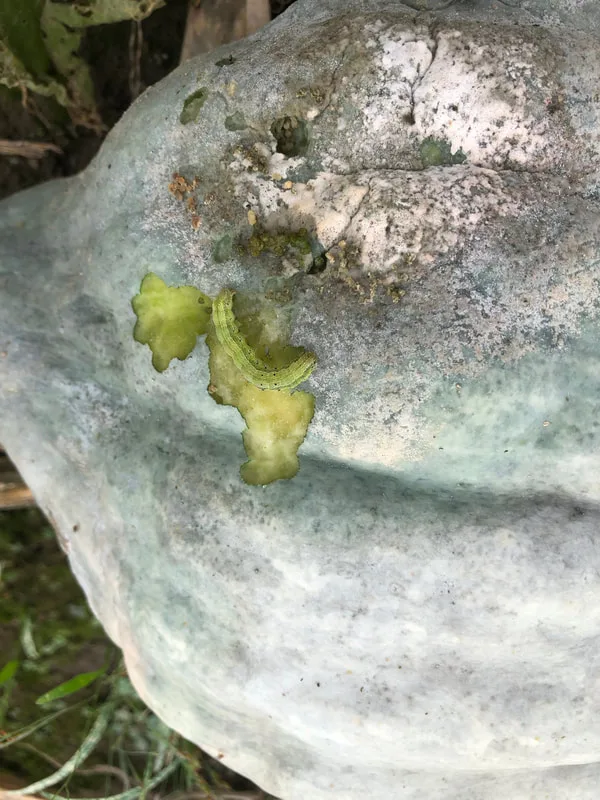
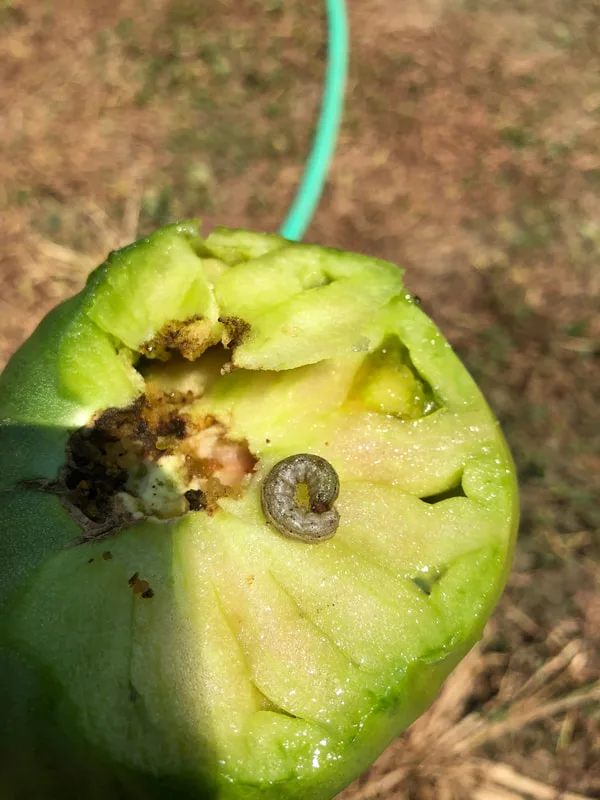
    The insect pressure has been incredible this year because of flea beetles, an insect that munches on cabbage and other crops love the heat. The excessive rot, rain, and humid conditions made the population of fruit flies explode both in storage and in field with crops such as tomatoes, fruits, and basically anything that had potential to rot because of the weather.


    Soil borne disease like Phytophthora Capsici which attacks crops such as peppers, eggplant, tomatoes, winter, summer squash, and pumpkins is a killer in the wet seasons. Most fields in the Pioneer valley are infested with this disease which is nearly impossible to get rid of. This is a fungal disease that is only active in saturated soil (moves in water) and can persist dormant in soils for up to 7 years. This disease can travel on equipment or your shoe from field to field. It infects crops by attacking the roots and slowly cutting the water and food source to the plants. This disease wiped out many of of our winter squash, peppers and tomatoes decreasing our yields. 

    Lastly, weeds have been a struggle to control this year. So much rain has made cultivating and other weed control tactics difficult to maintain because of the mere fact of not being able to physically enter the fields. The result was a lot of weeding and coping with reduced yields... basically, we couldn't keep up with the amount of weed germination and growth because of the rain and heat. Quick fact, most weeds love the heat and don't mind the rain because they are acclimated to this area. 
    No one ever said farming would be easy, but this year sure pushed many of the farmers in the valley to their limits. There was much learned this season, much lost and gained at the same time. To me, a season like this one made farming real.

    ​There are major downfalls in choosing a career and life like this one, but we cannot let this stop us. We have to push through the difficulties and harvest the crops that grew the best for us. It was a great season to see which varieties held up better than others under these extreme conditions, which ones were resistant to certain diseases and weather conditions, and ones that failed miserably. We look at the 2018 season as an experience, not a loss.

    We hope this sheds some light on the season and the life of local farmers.

    From all of us here at Bardwell Farm thank you for your support!
    Picture
  • Published on

    Breaking Ground

    We were interview by CISA (Community Involved in Sustaining Agriculture) recently for their new video series "Breaking Ground: Beginning Farmer Stories", highlighting young people in farming. Have a look!

    Many thanks to the CISA crew for the opportunity and featuring our humble little farm, outstanding job!