Field Season Review
The purpose of this field season was to collect data on the abundance and species diversity of birds and quantify their habitats. I completed three rounds of bird surveys over the course of the summer, each time performing 10-minute standardized point counts of all birds within a 50-meter radius. During each point count I recorded the number and species of birds I observed, as well as which habitats they were occupying and any feeding or breeding behaviors they were exhibiting. I also conducted two rounds of habitat surveys, which I completed by dividing the area of the 50-meter radius point count circle into distinct land cover types (i.e.orchard, cover crop, woodland, etc.) and measuring the height
and density of the vegetation and identifying the plants present throughout each land cover type. I began these surveys in around late May and finished in mid-July to coincide with the breeding season of most species in this region.
Highlights of the Field Season
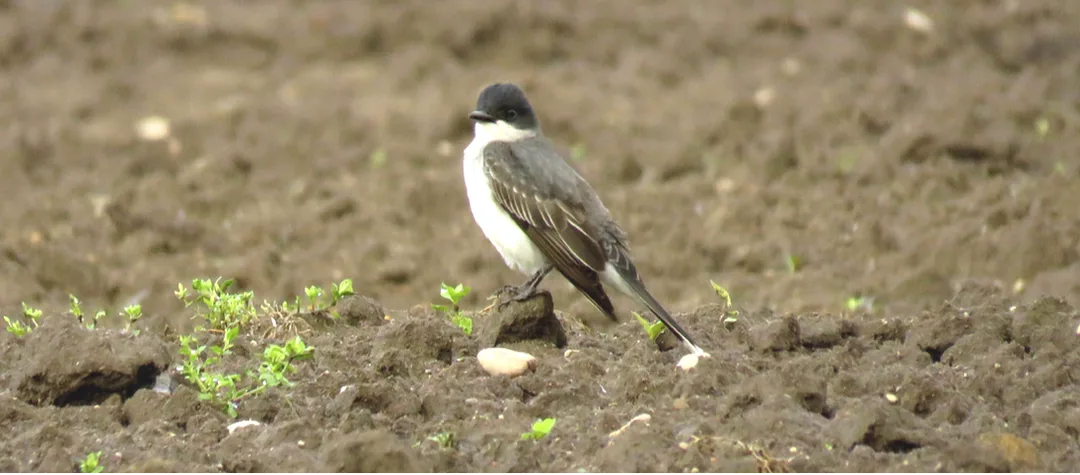
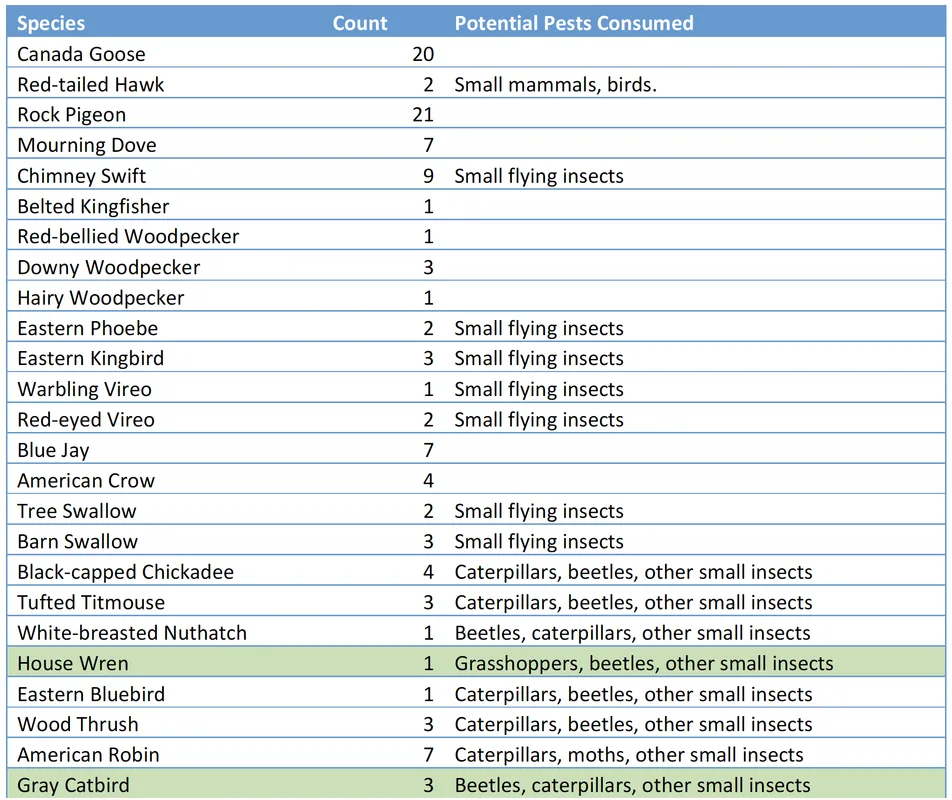
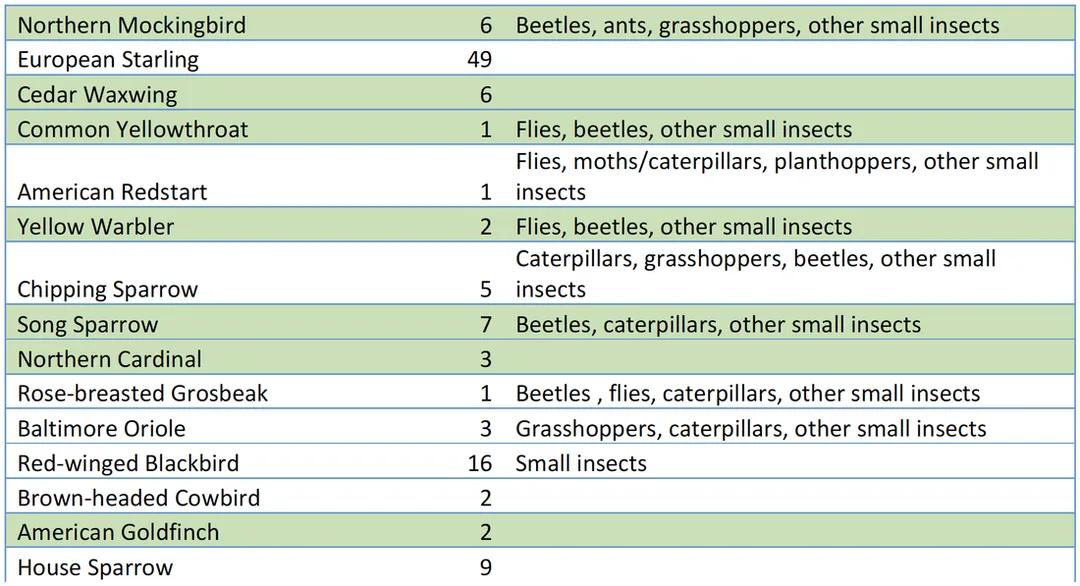
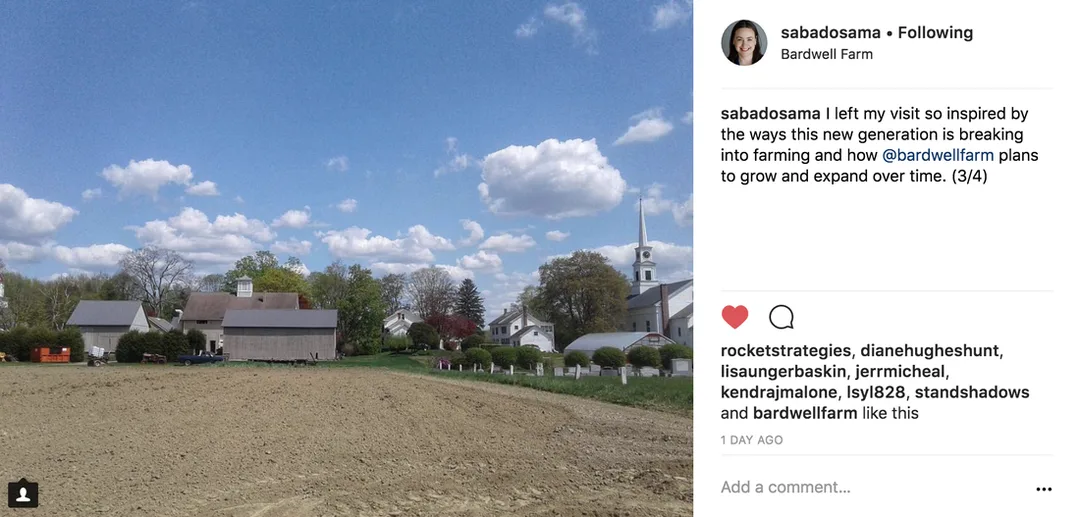
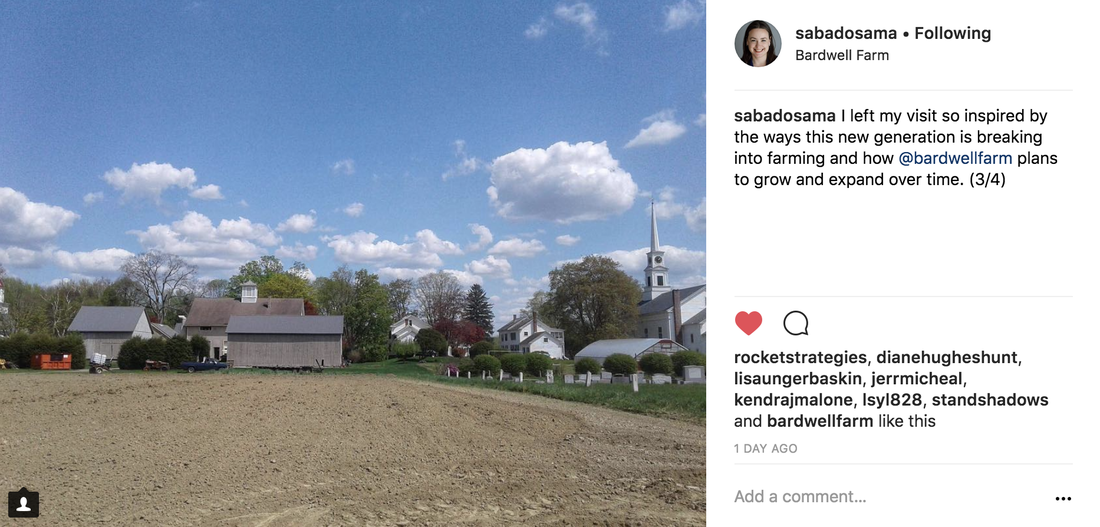
Not only was Bardwell Farm one of the smallest farms I surveyed over the course of the summer, it also was located in one of the most developed or suburban areas that I visited. Because of these two points, I did not anticipate Bardwell having a very long species list. I was, however, proved totally wrong. With a list of 40 bird species and a total of 225 individuals, Bardwell was a remarkably diverse and unique farm that surpassed my expectations. Due to Bardwell’s more suburban surroundings, I observed a number of species that are uniquely adapted to human-altered habitats. Chimney Swifts were a common aerial visitor, as well as Rock Pigeon and Eastern Kingbird. On my very first visit to the farm, I observed a pair of Redtailed Hawks perched and calling from the top of one of the trees on the edge of the farm. Although I didn’t see them on any subsequent visits, I wouldn’t be surprised if they nested somewhere nearby. The only Canada Geese I saw at any farm all season long were in the grassy fields adjacent to the farm.