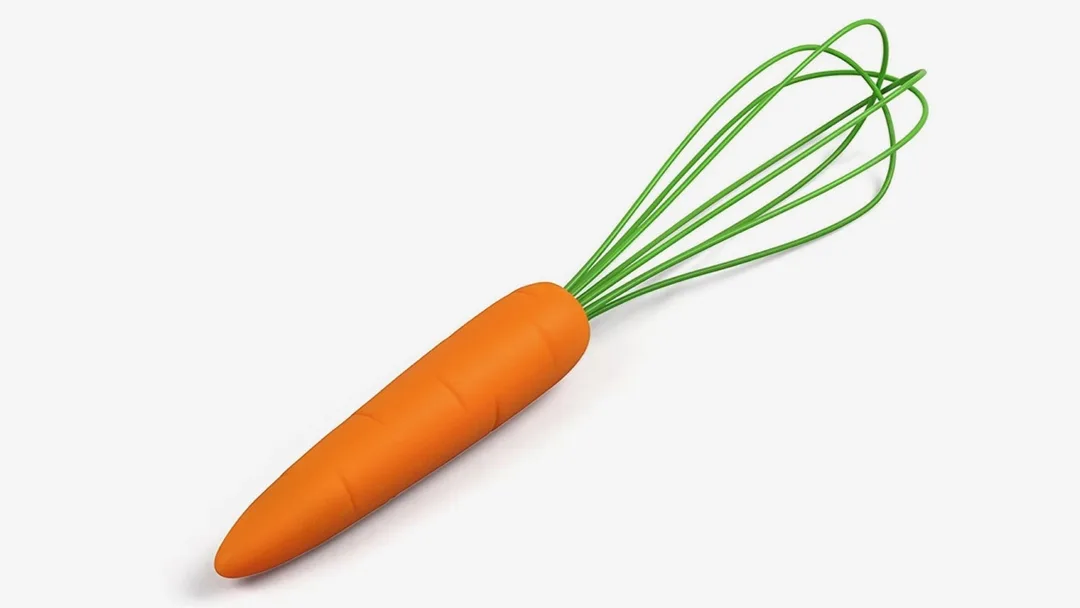
The Cook's Carrot Whisk
Fred & Friends $12
Whether you're whipping up a crepe or a carrot cake, the cooks carrot will help make it happen. The wires are coated with a green durable, and easy-cleaning silicone making for easier whisking. The handle is plump, cushy silicone too; fits perfect in the hand for those long tough whisk jobs. The whisk is also completely safe on the top rack of the dishwasher.
Silicon Garlic Peeler
Easem $5
A quick and easy way to peel whole garlic cloves! No garlic odor left on your hands or countertop. Easem's Silicon Garlic Peeler is dishwasher-safe.
VOFO Herb Scissors Stainless Steel
VOFO $9
Say good-bye to tedious mincing and chopping with the most useful, fun kitchen gadget ever! Two snips with the sharp, finely balanced 5 blades equals 10 knife chops. It will be one of your favorite kitchen tools for your home herb garden!
Kitchen Candy Collapsible Over the Sink Colander
JB Enterprises, Inc $18
Space saving design and collapses to less than 1-5/8 inches in height. Colander capacity holds 6 quarts of your favorite pasta, vegetables, fruit, leafy greens, or canned foods. It can be used in or over a sink and freestanding on a counter or table. Also dishwasher safe!
Kikkerland Hedgehog 60-Minute Kitchen Timer
Kikkerland $8
Adorable hedgehog kitchen timer goes up to 60 minutes. Turn clockwise to 60 minutes, then counter clockwise to set desired time. It has a steel mechanism with plastic exterior and measures 2.5 x 1.75 inches.
FridgePad 2
Woodford Designs $22
The FridgePad 2 is the best way to store and display your iPad in your home and office. No tools are required to magnetically mount the FridgePad 2 and your iPad to your fridge door so it's on proud display in the heart of your home. We have completely redesigned the FridgePad so that it now works with far more devices, spins 360 degrees for easy landscape or portrait viewing, works with iPad cases, has super fast iPad mounting and still retains the ultra secure slam proof magnetic mount.
For more Homegrown News subscribe to my newsletter!
Like or Tweet this article to a friend by clicking the badges below. Thank you for your support.
Fred & Friends $12
Whether you're whipping up a crepe or a carrot cake, the cooks carrot will help make it happen. The wires are coated with a green durable, and easy-cleaning silicone making for easier whisking. The handle is plump, cushy silicone too; fits perfect in the hand for those long tough whisk jobs. The whisk is also completely safe on the top rack of the dishwasher.
Silicon Garlic Peeler
Easem $5
A quick and easy way to peel whole garlic cloves! No garlic odor left on your hands or countertop. Easem's Silicon Garlic Peeler is dishwasher-safe.
VOFO Herb Scissors Stainless Steel
VOFO $9
Say good-bye to tedious mincing and chopping with the most useful, fun kitchen gadget ever! Two snips with the sharp, finely balanced 5 blades equals 10 knife chops. It will be one of your favorite kitchen tools for your home herb garden!
Kitchen Candy Collapsible Over the Sink Colander
JB Enterprises, Inc $18
Space saving design and collapses to less than 1-5/8 inches in height. Colander capacity holds 6 quarts of your favorite pasta, vegetables, fruit, leafy greens, or canned foods. It can be used in or over a sink and freestanding on a counter or table. Also dishwasher safe!
Kikkerland Hedgehog 60-Minute Kitchen Timer
Kikkerland $8
Adorable hedgehog kitchen timer goes up to 60 minutes. Turn clockwise to 60 minutes, then counter clockwise to set desired time. It has a steel mechanism with plastic exterior and measures 2.5 x 1.75 inches.
FridgePad 2
Woodford Designs $22
The FridgePad 2 is the best way to store and display your iPad in your home and office. No tools are required to magnetically mount the FridgePad 2 and your iPad to your fridge door so it's on proud display in the heart of your home. We have completely redesigned the FridgePad so that it now works with far more devices, spins 360 degrees for easy landscape or portrait viewing, works with iPad cases, has super fast iPad mounting and still retains the ultra secure slam proof magnetic mount.
For more Homegrown News subscribe to my newsletter!
Like or Tweet this article to a friend by clicking the badges below. Thank you for your support.